
- CollegeCentral Saint Martins
- CourseMA Biodesign
- Graduation year2025
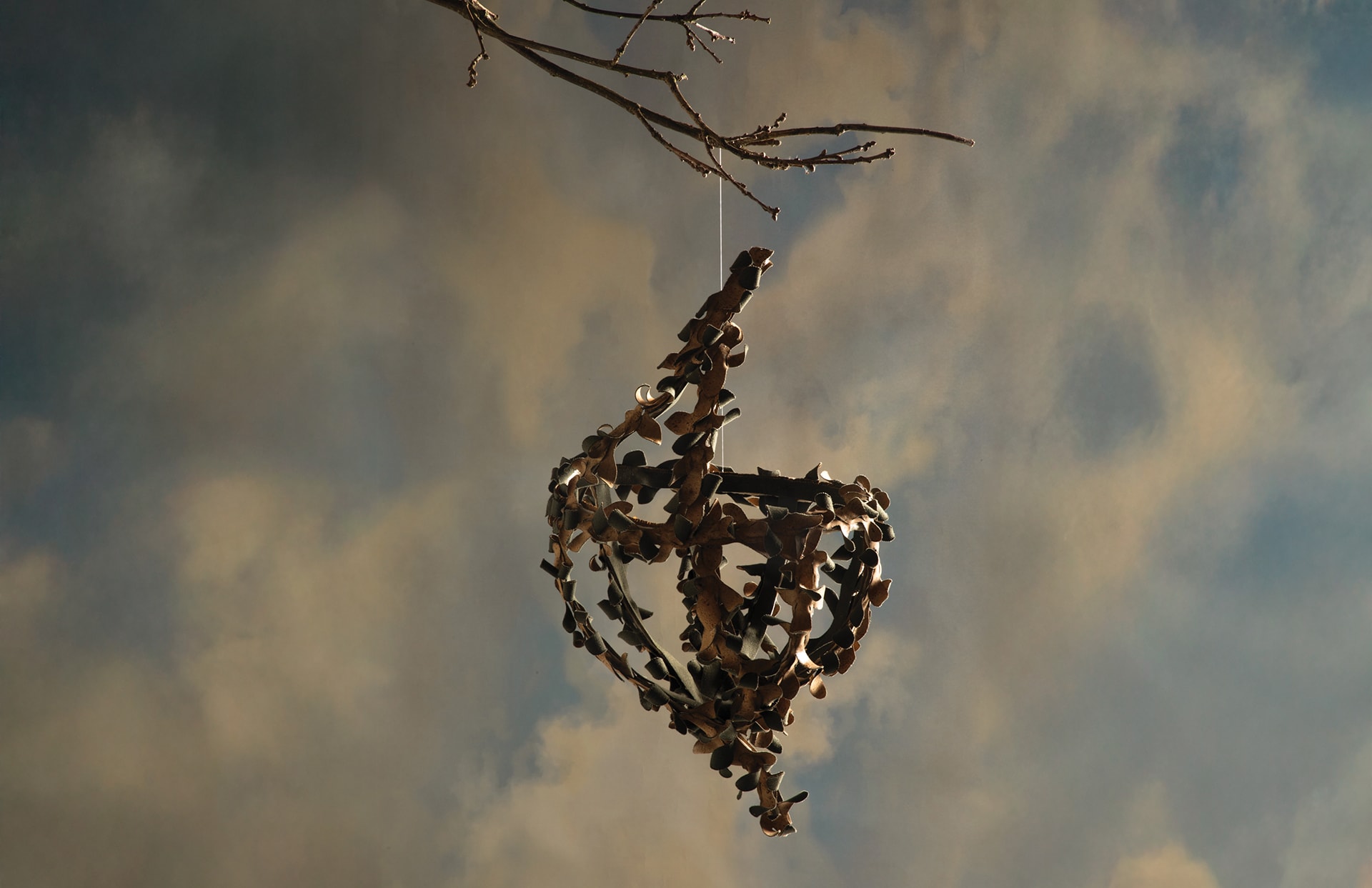
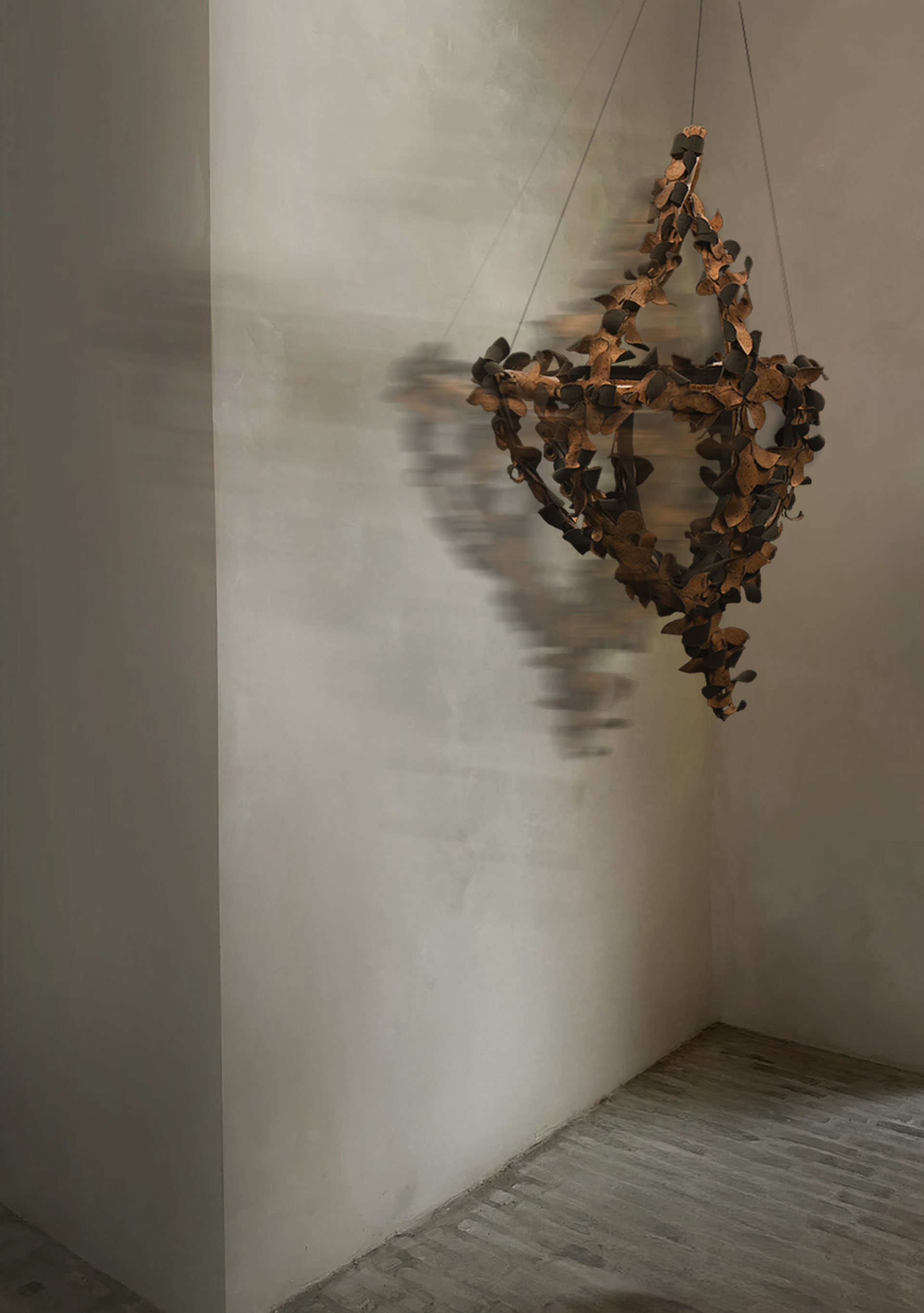
Payonke explores this possibility through active, hybrid materials that contain Bacillus subtilis spores— probiotic bacteria that react to moisture by changing shape, much like how pinecones open in the rain. Drawing from Polish pająki ludowe—traditional folk mobiles once made to bring prosperity into the home—this project reimagines the craft through a new perspective on materials. The result is a series of responsive, interlocking structures that act as natural indicators of indoor moisture, helping us reconceive our environments as more adaptive and health-conscious systems.
By treating microbes not as threats but as collaborators, Payonke proposes a new material language—where tradition meets innovation, and static objects give way to dynamic, living systems that support and enhance the spaces we inhabit.
Final work
Payonke: Adaptive Mobiles
Shape-shifting, agential objects that challenge conventional notions of materials, craft, and cohabitation with microbes.
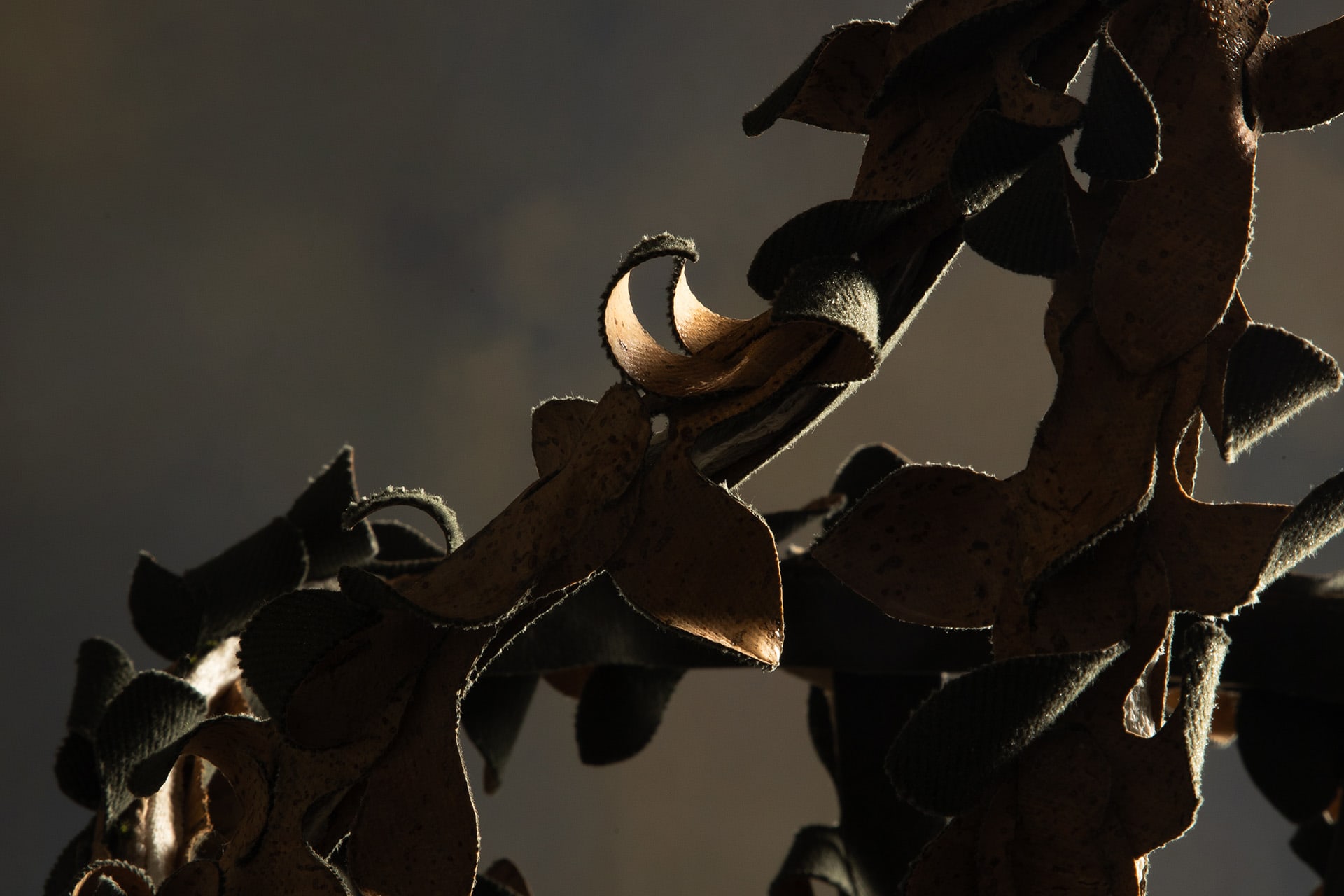
Close up
Curl and open upon contact with a water droplet — detecting moisture levels

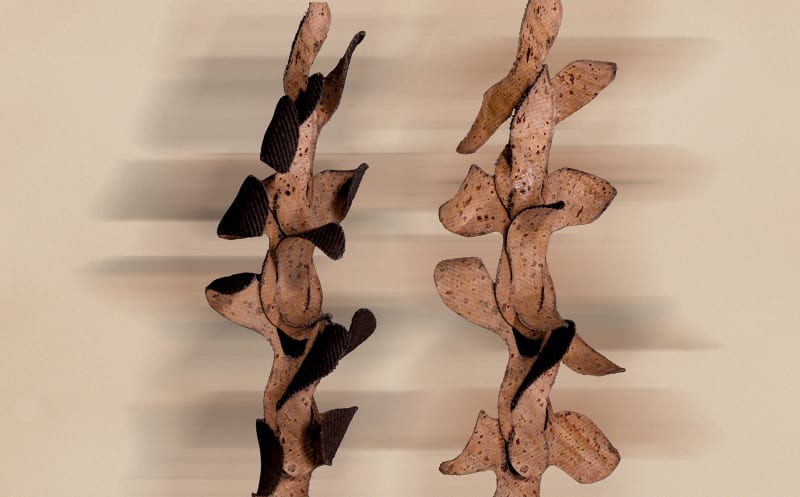
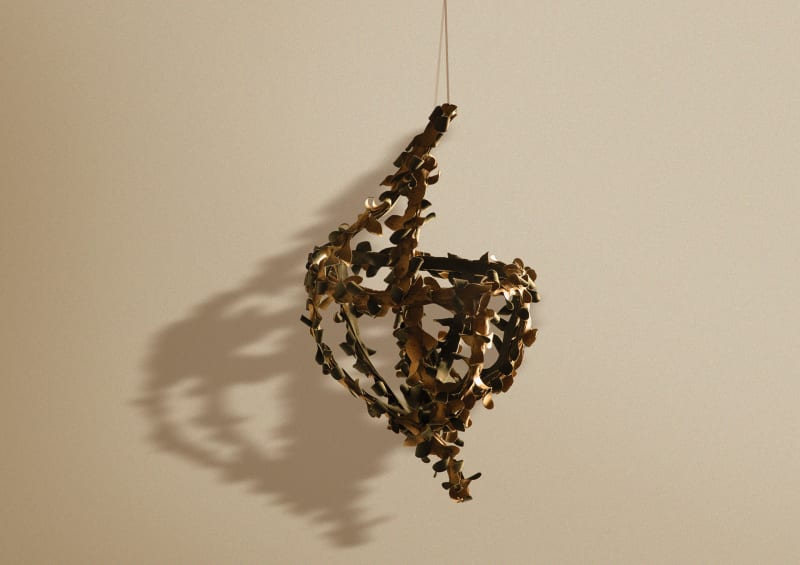
Research and process
Payonke - movement
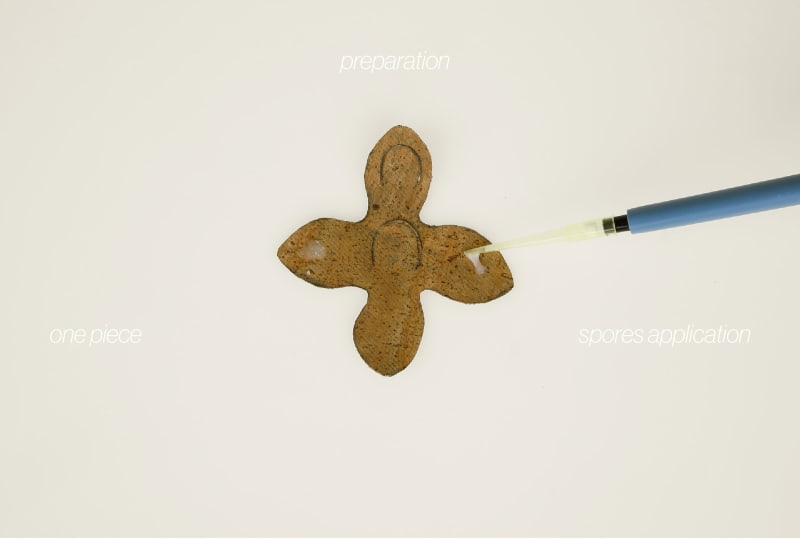
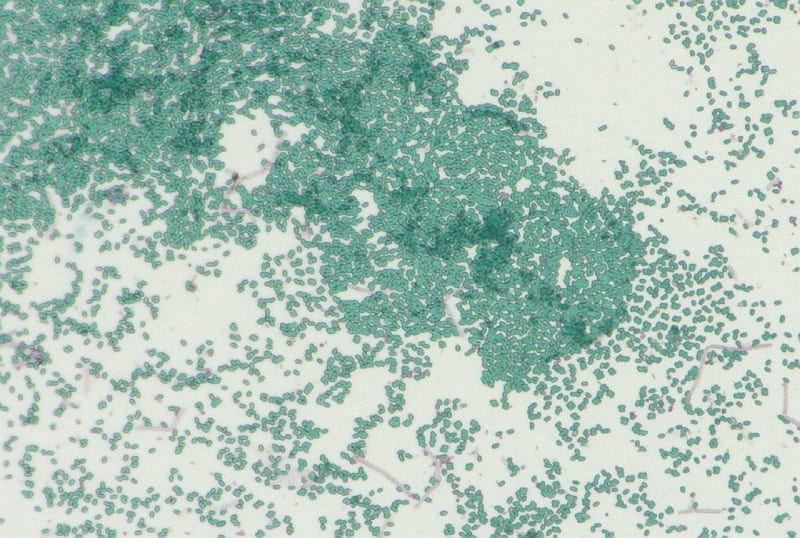
Bacterial Spores – Hygromorphic, Shape-Shifting Behaviour
Agential Microbial Material: Cork embedded with bacterial spores that sense and respond to environmental moisture, enabling non-electronic, dynamic material transformation

Share this project
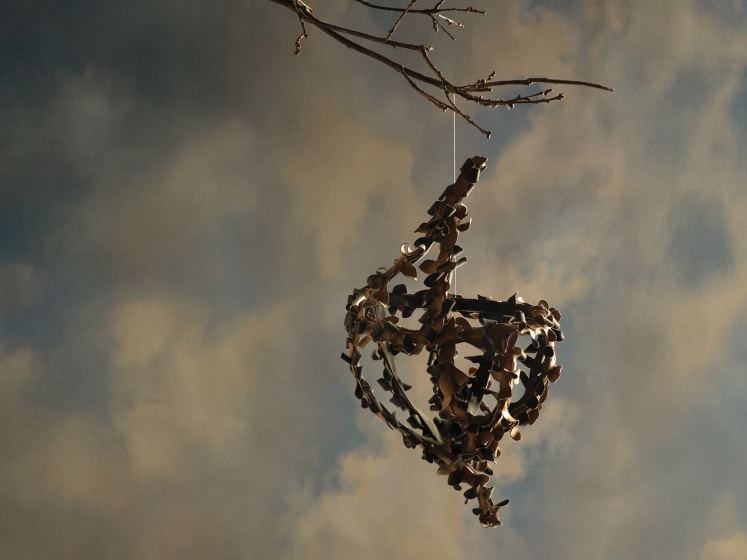
Payonke: Adaptive Mobiles
What if the objects in our homes could sense, shift, and adapt like living things? Payonke explores this possibility through active, hybrid materials that contain Bacillus subtilis spores— probiotic bacteria that react to moisture by changing shape, much like how pinecones...
A link to this page has been added to your clipboard