
- CollegeUAL Creative Computing Institute
- CourseMSc Creative Robotics
- Graduation year2025
Content Warning: This project involves the concept of a robot being deliberately shut down and physically destroyed while displaying lifelike cues.
The project aims to discuss this question: How does embodiment-induced empathy influence human’s moral concern for non-moral agent like robots?
By designing this prototype robot with embodied features and simulating deactivation, this research provides a controlled and repeatable context in which participants encounter cues associated with harm, which usually reserved for sentient beings. Through this methodology, the study explores how embodied features influence empathy, how empathy extends beyond biological life, and how moral concern can be generated towards entities lacking intrinsic sentience.
Moral concerns about robots will shape the social norms that define future HRI, prompting reflection on human morality. These investigations offer insight into the psychological processes by which humans negotiate the emergence of new categories of artificial, socially interactive partners.
Final work
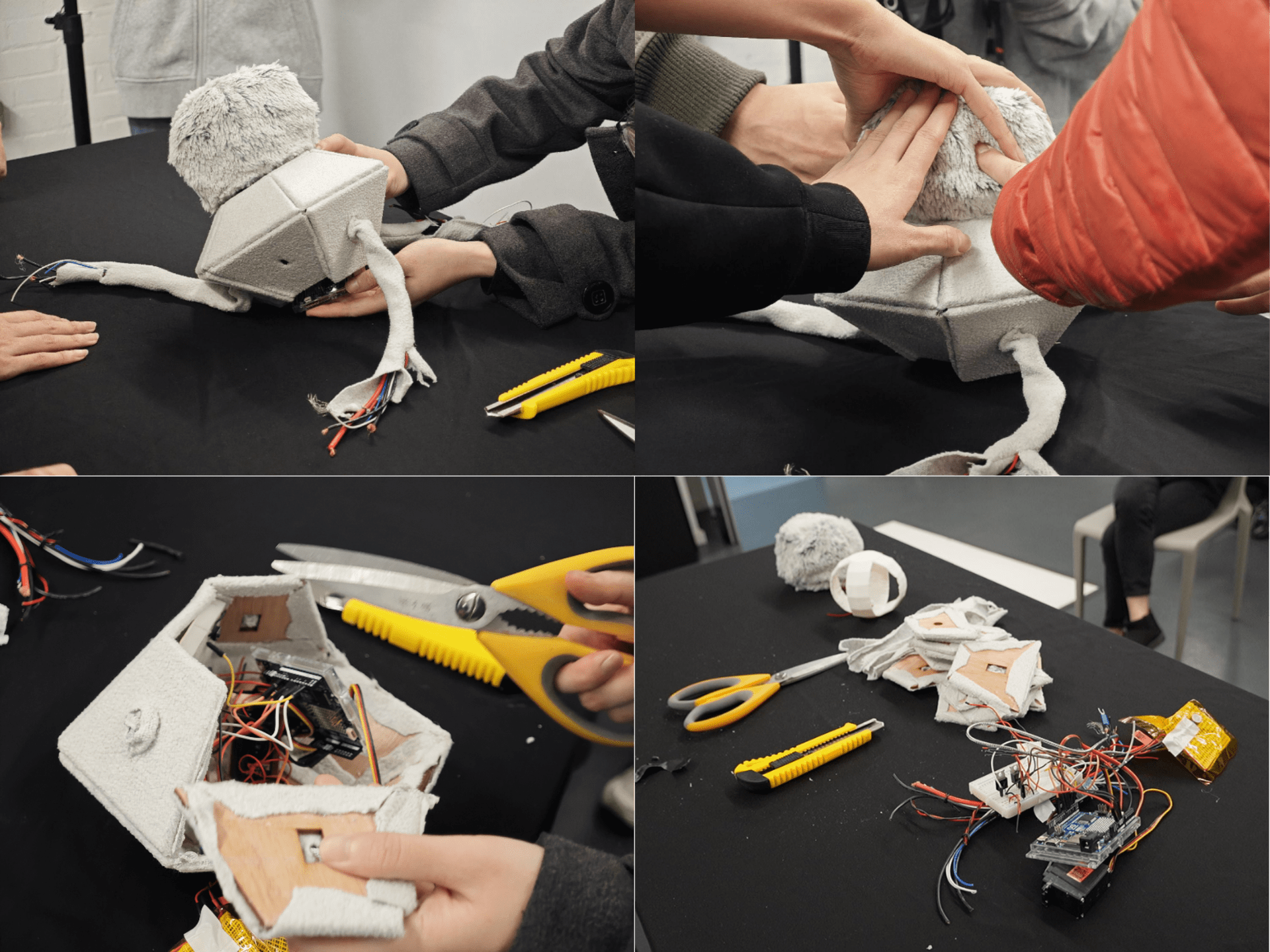
Destroying the robot
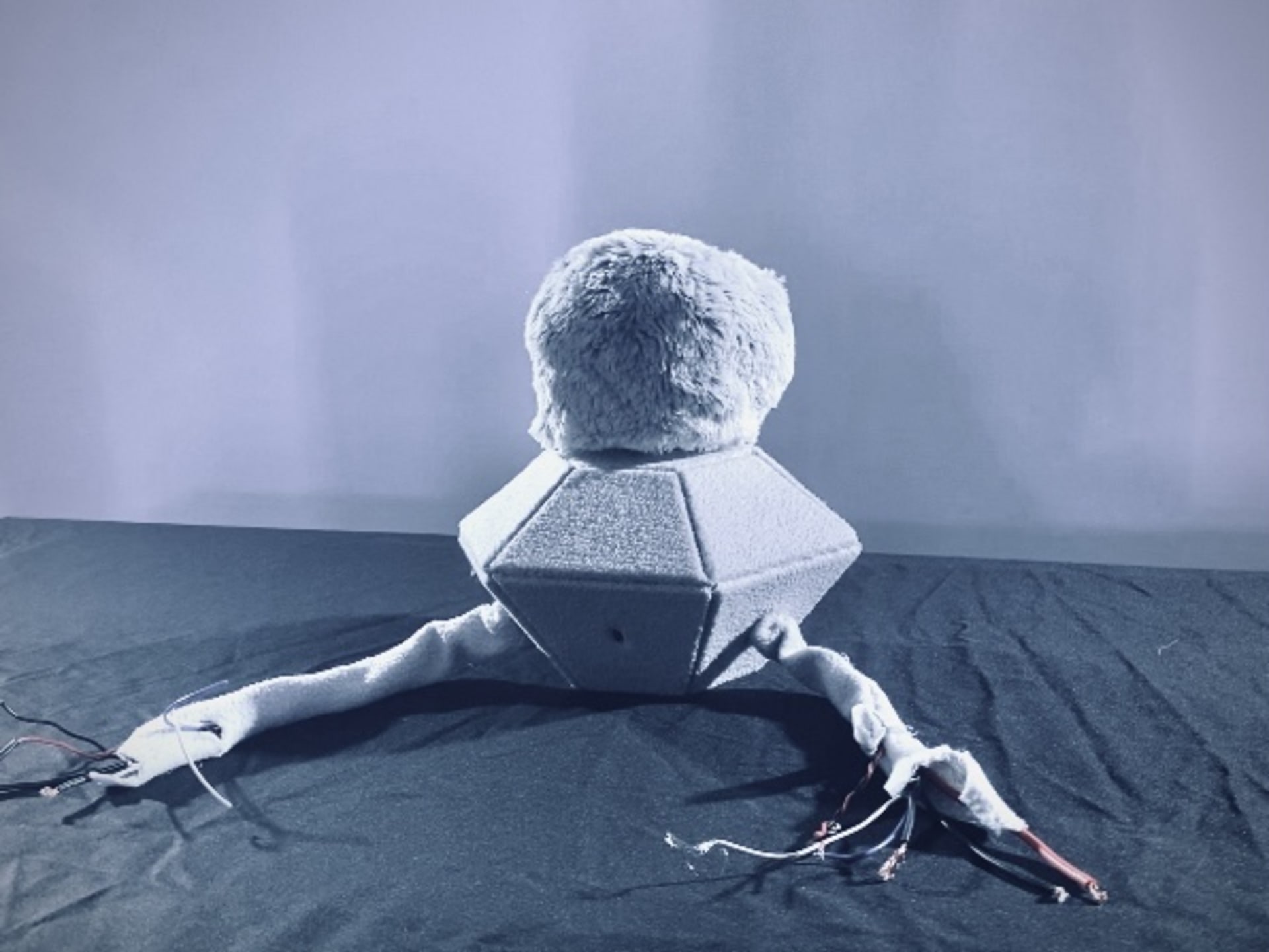
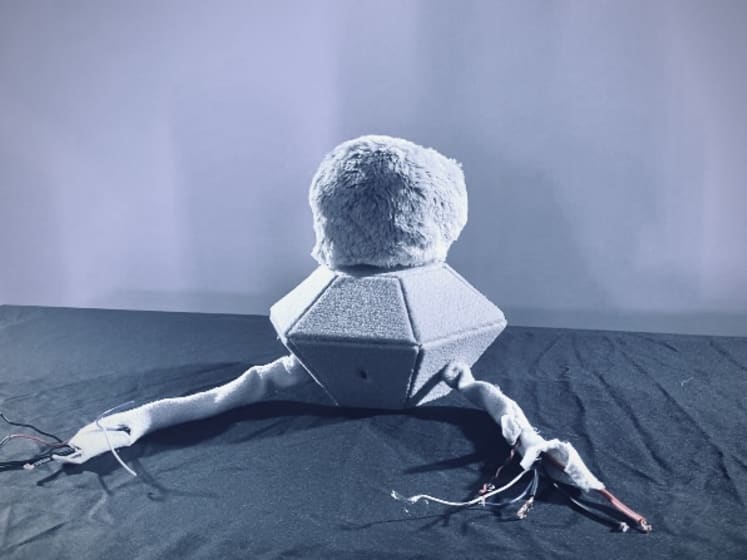
The prototype robot is a lifelike, embodied robot capable of simulating physiological cues including heartbeat, breathe and warmth.
By staging a performance of robot “death”, the workshop examines the embodied cognitive affective processes through which humans negotiate emerging moral relationships and ethical concerns with increasingly lifelike artificial entities.
Workshop presenting the performance
The workshop was held on 27/11/2025. We observed whether it elicited different levels of sympathy and moral concern among participants. Thanks for the participants and their feedback.
Participants were invited to:
- Read a brief background story about the robot used in this study.
- Complete a questionnaire about their initial impressions and feelings.
- Watch a presentation in which the robot is shut down and destroyed.
- Complete a questionnaire reflecting their reactions after the demonstration.
Results show that the embodied experience successfully increased participants' self-reported empathy, while moral status judgements declined due to the persuasive background story that presented the robot as an environmental hazard. Therefore, the rational utility argument limited the efficacy of the embodied experience in translating emotional gains into sustained moral concern. Future research should prioritise the design of embodied cues that generate an overwhelming visual preference for the robot's existence.
Share this project
A link to this page has been added to your clipboard