
- CollegeCamberwell College of Arts
- CourseMA Fine Art: Painting
- Graduation year2025
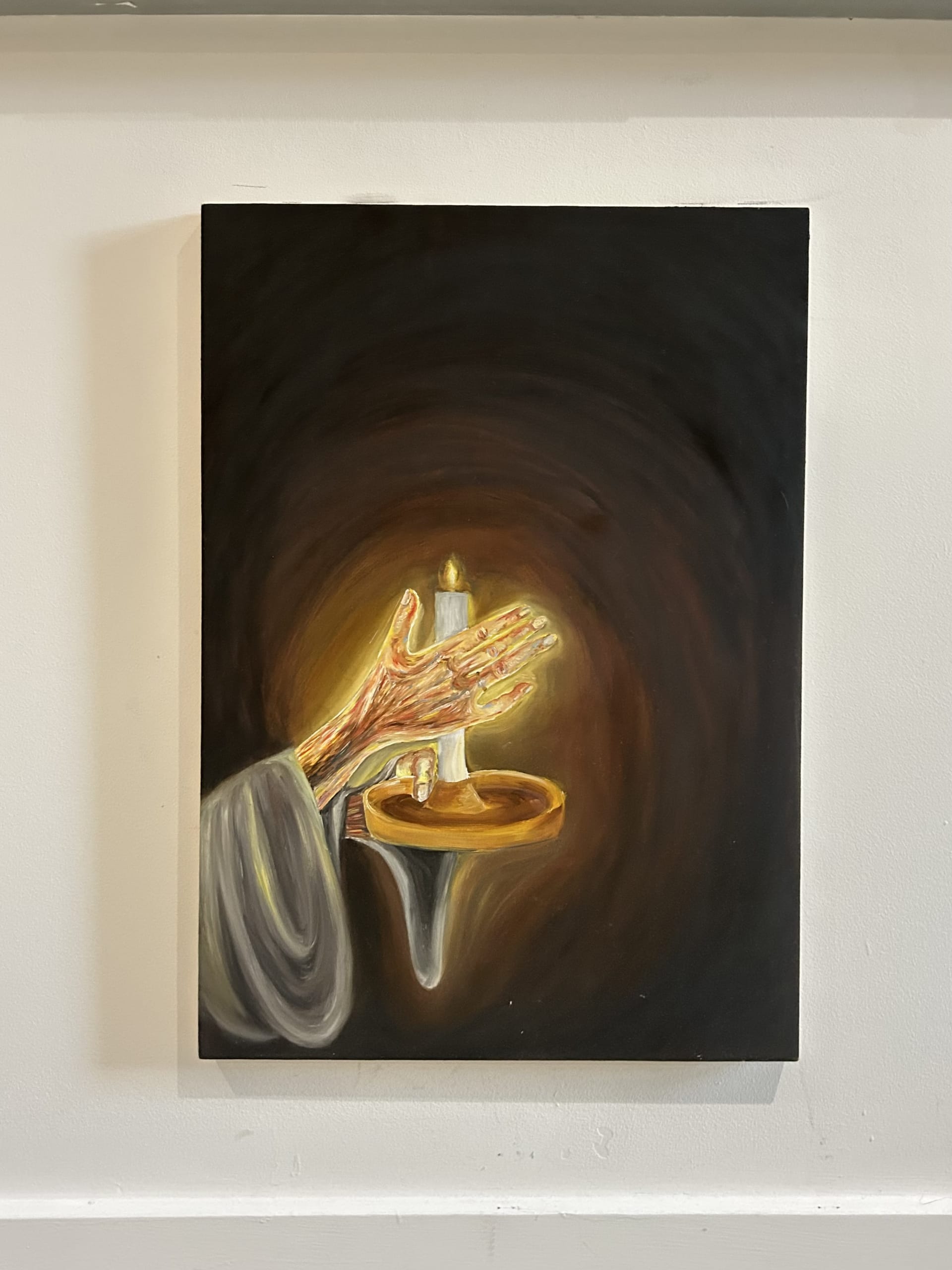
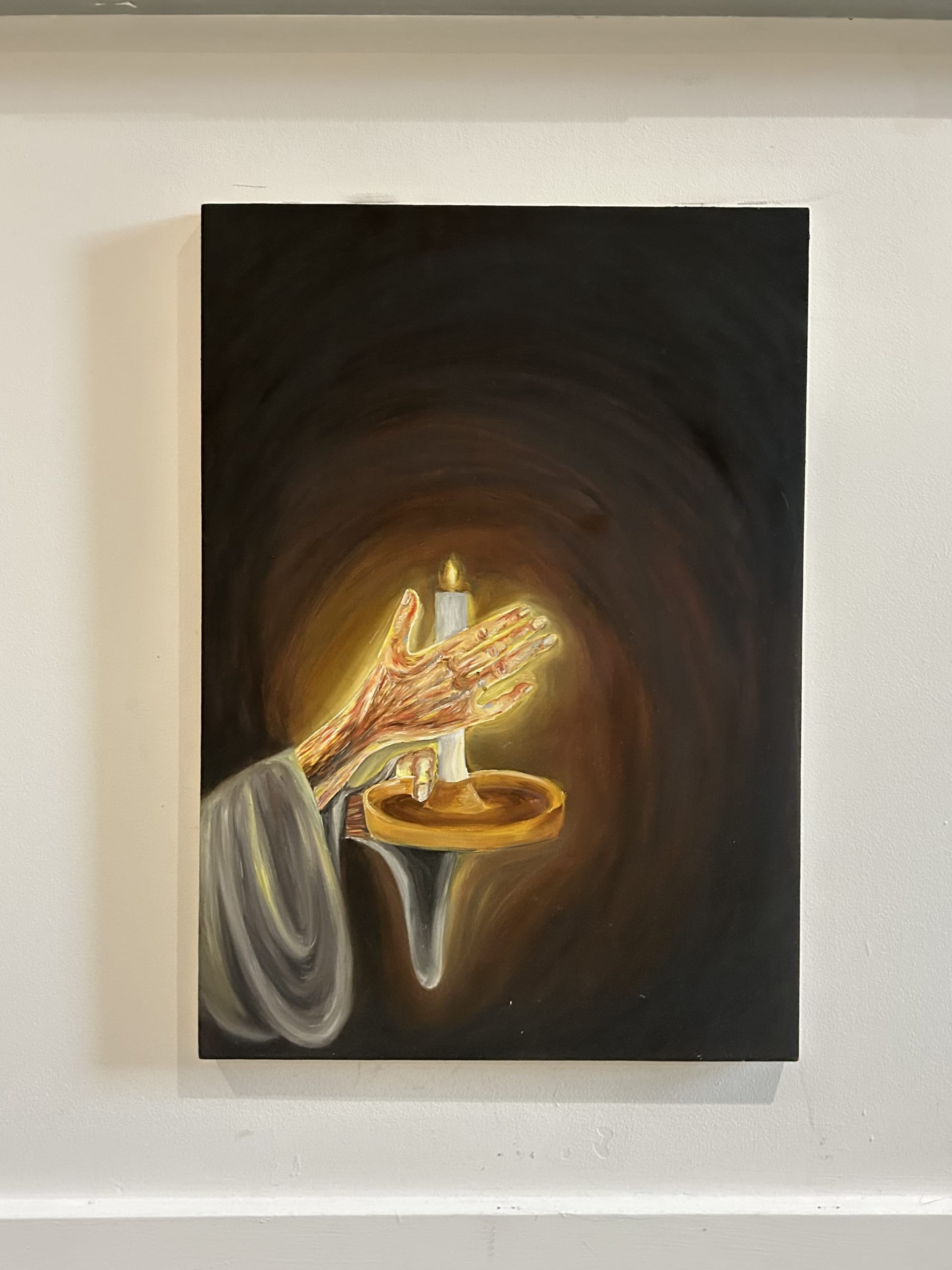
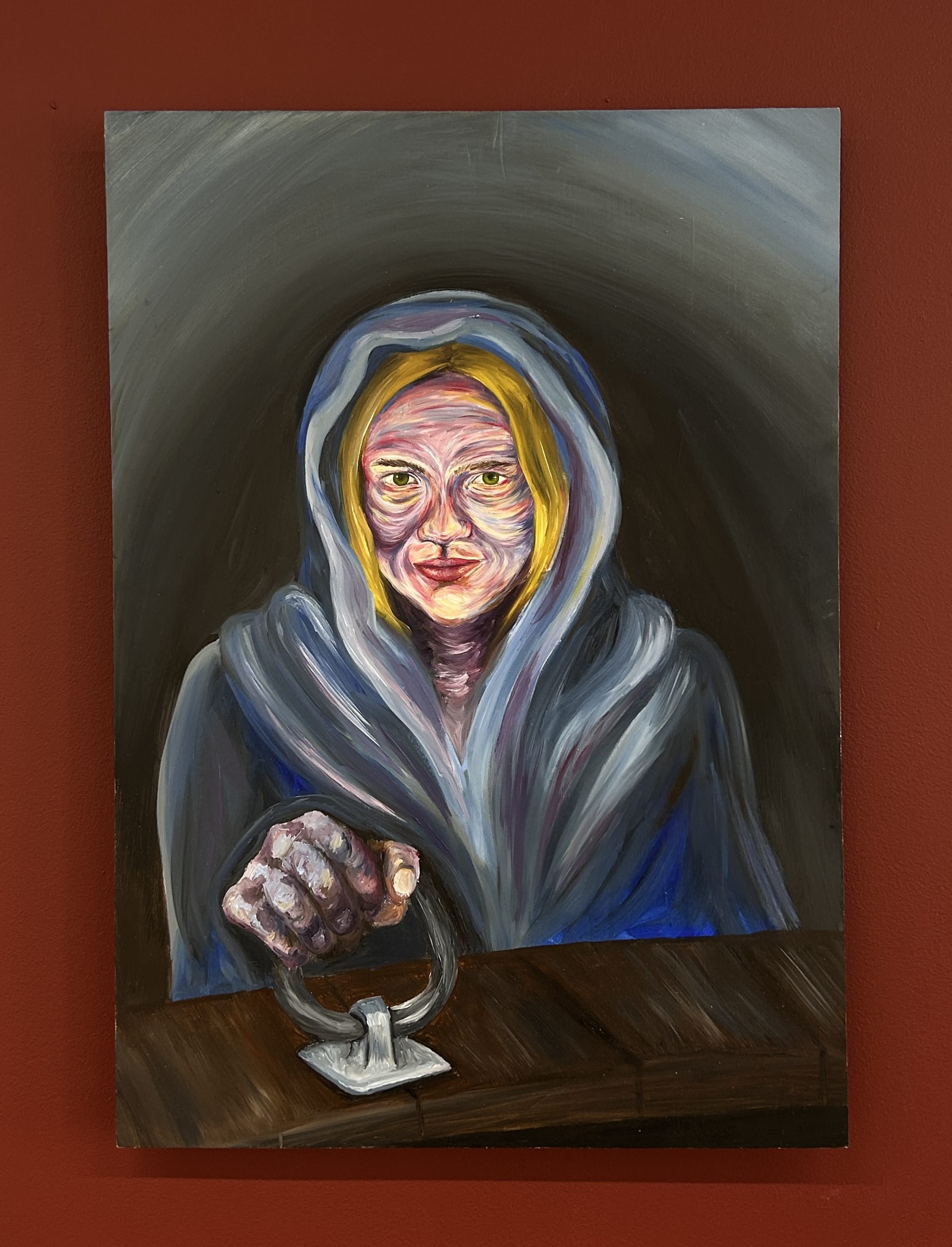
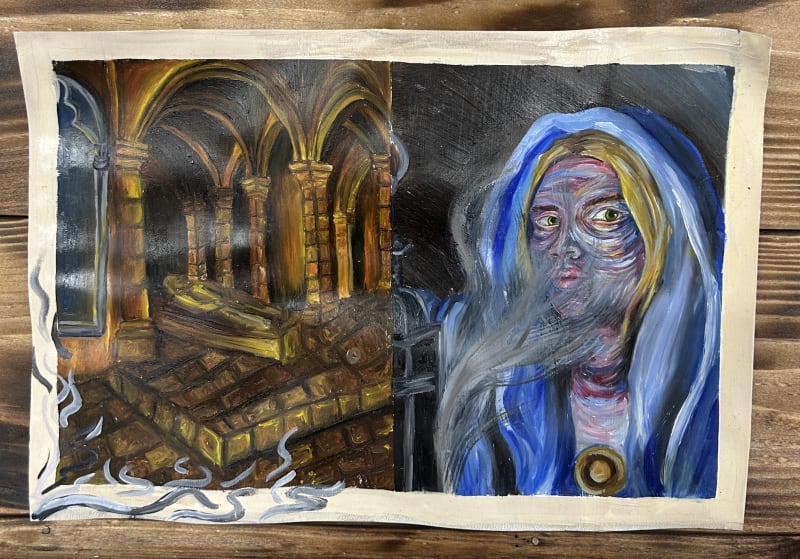
This project takes a scene from the first ever Gothic novel, 'The Castle of Otranto', by Horace Walpole, and reimagines it from a more modern, feminist perspective by giving the character Isabella agency and reclaiming the narrative to empower her. Each painting references typical Gothic literature features and uses them as a way to further the narrative, whilst not always explicit, it encourages the audience to engage with the works more.
The narrative has been adapted in a way that shows Isabella taking charge of her own fate, running from her pursuer, and not gaining freedom through the help of a man, as originally written, but by finding her own strength and determination to free herself.
Final work
Whispers in the corridor

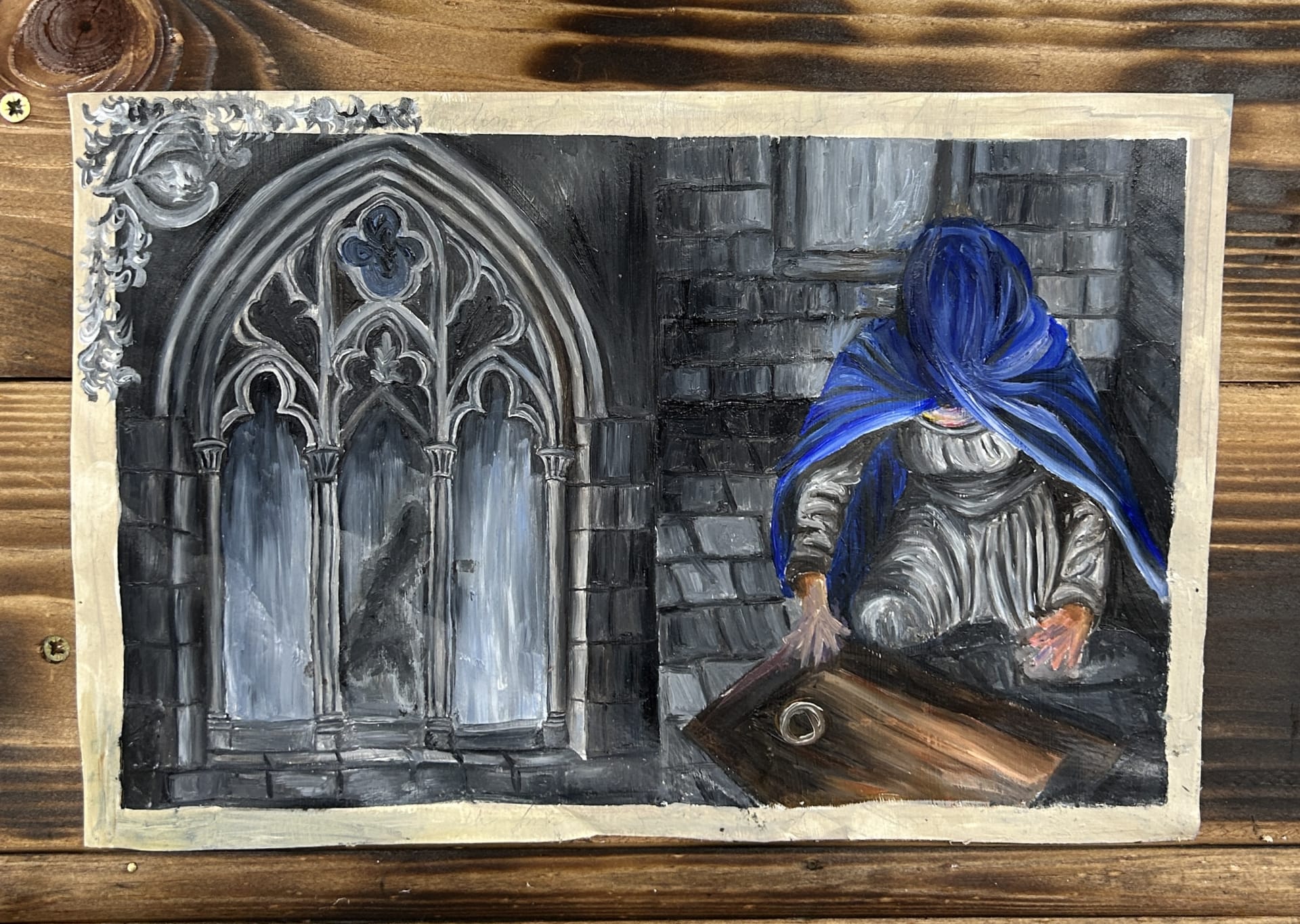
The Flight, Rewritten... continued
Research and process
The Castle of Otranto
Horace Walpole’s ‘The Castle of Otranto’ (1764) is considered the first Gothic novel and the origin point for the genre’s tropes- haunted castles, the supernatural immersed in reality, patriarchal ruling and vulnerable heroines. The novels follows the fate of Isabella and Prince Manfred’s family after the death of their son, Isabella’s fiancé. He dies under supernatural circumstances, after a giant helmet falls from the sky. Manfred, driven by his obsession with power and lineage, he aims to control the women around him and force Isabella to marry him. She flees from he castle through a series of gothic plot devices; old haunted castles and churches, ancient prophecies, ghosts, trap doors and secrets.
The Castle of Otranto, established various archetypes for women that have set a precedent for the gothic genre that remains today. The three main stereotypes that Warpole uses, are the Damsel in distress, the passive and the object.
1. The Damsel in Distress-
- Isabella embodies this stereotype, she is young, beautiful, and in comstant need of rescue. Symbolising women’s vulnerability and need to protected in a patriarchal world
2. The Passive -
- Hippolita, Manfred’s wife, is a submissive, obedient wife, who is passive even when she or Isabella is being treated cruelly. This reinforces the idea that feminine virtue lies in suffering and self-sacrifice.
3. The object -
- All women in this novel are subject to beinf percied as an object, and being used as an object or treated as property to the men around them. They are simply used as tools for men to gain power.
The female characters are used as plot devices and embody these sexist stereotypes, serving to advance the male-centred narrative than to exist as fully developed individuals. Matilda and Isabella are portrayed through their vulnerability, virtue and passivity, rather than through complex personalities.
Isabella, is central to the plot, however not because of he own agency, but because of the desires and ambitions of Manfred, who poses a constant threat of forced marriage and imprisonment, showing their lack of power and autonomy. They are reduced to symbols of innocence or purity to help justify the make characters actions or create further suspense in the plot.
The lack of agency the female characters have and the standard it set for future gothic fiction, is what drove me to choose this novel to reframe the narrative from a feminist viewpoint. It is important to give these characters agency and give women more of a voice than they have been given previously, as these stereotypes have made their way into our subconscious and into our reality. You can see day to day how women are still not taken seriously in leadership roles and are subject to sexualisation or seen as secondary to their male partner. (Walpole, 1764)
Walpole, H. (1764). The Castle Of Otranto. S.L.: Blurb.
The Witch (Robert Eggers 2016)
The Witch (Robert Eggers 2016), served as a source of inspiration for the imagery and development of the composition of my work. His cinematography evokes an eerie aesthetic, and the shots create a sense of suspense and unnerving through very little dialogue. Eggers uses lighting and colouring to add to this tension, his use of candle light is particularly informative to my work as it successfully captures the embodiment of what a gothic scene is. This is something called chiaroscuro, a visual metaphor for good vs evil, light vs dark; the seen and the hidden. It captures the audience and immerses you in the scene, focusing on what is important, particularly focusing on facial expressions to further the narrative. Equally, it grounds the film in realism, enhancing its immersiveness and directly relates to Warpole’s the castle of Otranto, and the way he tries to bring the audience into the story with realism in his descriptions and the way he marketed the book. Continuing this analysis of light, the low lit scenes and shadows created add to the sense of dread and darkness which in turn enhances the feeling and fear of the unknown, which are both key factors in my work, the use of negative space and darkness to allow for the mind to run and create its own narrative.
The Witch. (2016). [Film] United States: A24, Universal Pictures, Elevation Pictures.
Share this project

The Flight: Rewritten
This project takes a scene from the first ever Gothic novel, 'The Castle of Otranto', by Horace Walpole, and reimagines it from a more modern, feminist perspective by giving the character Isabella agency and reclaiming the narrative to empower her. Each painting references typ...
A link to this page has been added to your clipboard