

- CollegeLondon College of Fashion
- CourseMA Fashion Marketing and Global Cultures
- Graduation year2025
Bridging the Sensory Gap explores how Virtual Reality (VR) can improve online shopping for Indian Gen Z consumers. The project responds to a key problem in e-commerce: the absence of touch. Without physical interaction, buyers often feel uncertain about products, especially in fashion.
Through practice-based research, I created immersive VR experiences that simulate tactile qualities of garments. The work shows how brands can use design strategies such as material visualisation, interactive environments, and user-led exploration to build trust and emotional connection online.
This project combines digital fashion design with cultural insight, focusing on how Gen Z in India engage with new technologies. By testing VR as a tool for storytelling and brand engagement, it suggests new ways for e-commerce to connect with consumers in more sensory and meaningful ways.
The work was developed in Blender and is compatible with Meta Quest 2 headsets.
Final work
Bridging the Sensory Gap in Indian e-Commerce
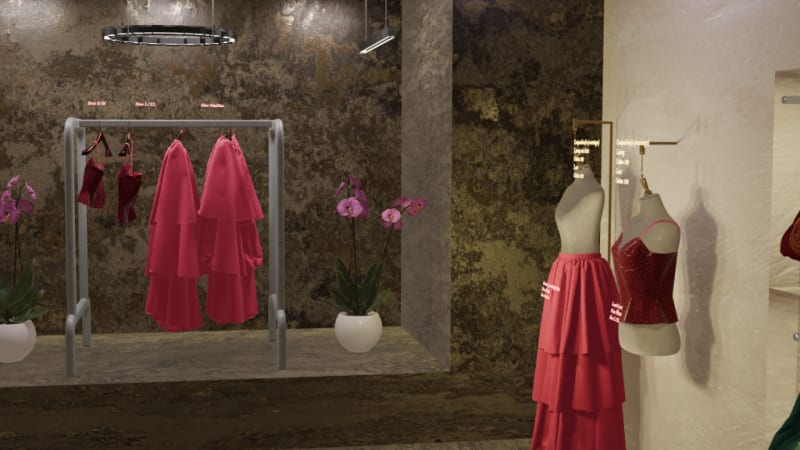
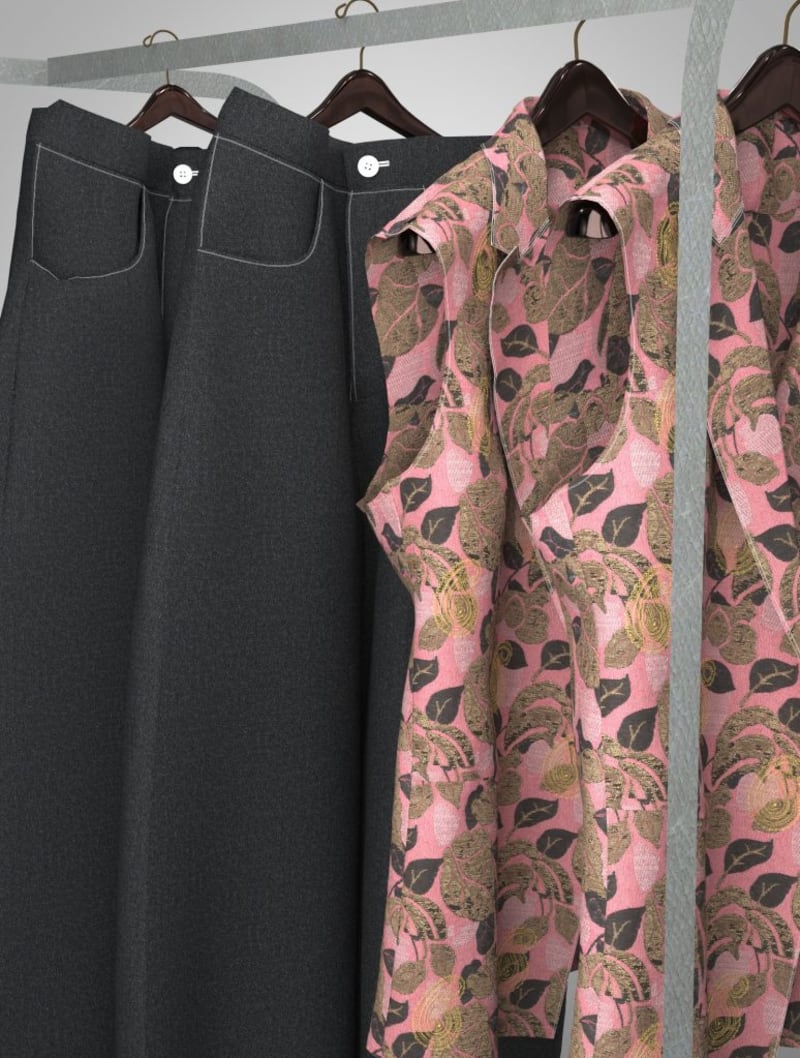
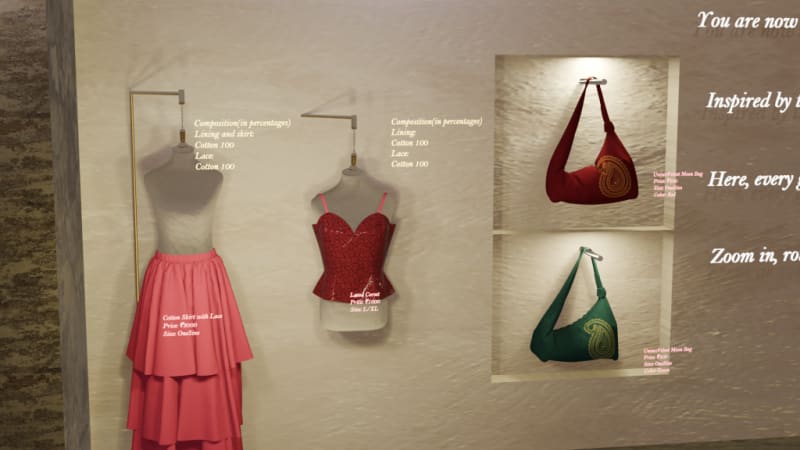
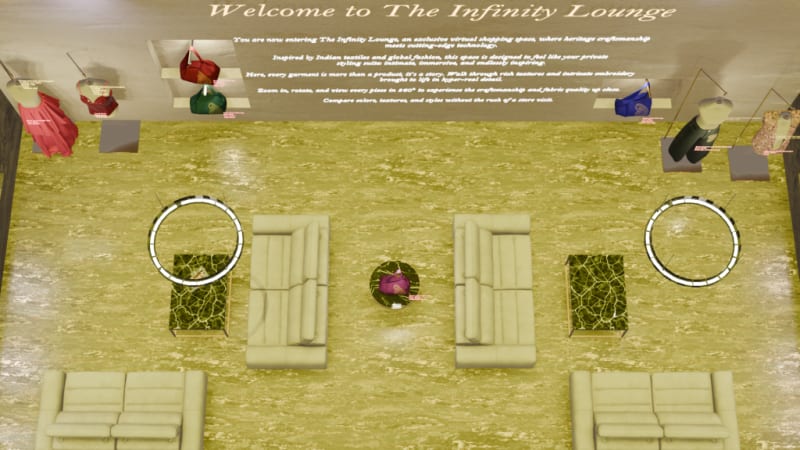
The video shows a virtual fashion shopping experience inside a digital showroom. Users can move through the space and view garments displayed in 3D. Close-up visuals highlight surface details such as smooth silks, textured cottons, and layered embroidery. The environment is designed to feel immersive and culturally inspired, combining modern digital aesthetics with references to Indian fashion. The focus is on recreating the sense of touch visually, helping users imagine how the garments would feel in real life.


Research and process
Bridging the Sensory Gap
The garments were created in CLO3D, where traditional Indian clothing was reinterpreted for modern use and developed with accurate textures, folds, and fit simulations. A few garments were taken from the free library and reinterpreted for Indian consumers.
Once the garments were completed, they were exported into Blender to be placed within a custom-built virtual retail room. Blender was used to refine the space through lighting, textures, and spatial design, helping to create an immersive environment where consumers could explore garments as if they were inside a store.
To make the space feel authentic, additional elements such as clothing rails, tables, and sofas were incorporated. These were sourced from free 3D asset libraries including Poliigon, Clo3D, and Sketchfab, which provided high-quality props to build a realistic retail setting. Each borrowed asset has been appropriately credited to its creator, recognising their contribution to this collaborative digital practice.
The process brought together original fashion design and careful environment construction, blending creativity with technical execution. By using CLO3D for garment simulation and Blender for environmental design, the project demonstrates the potential of virtual spaces to recreate sensory-rich shopping experiences. It also acknowledges the broader 3D design community, whose shared resources make experimentation and innovation more widely accessible.
Share this project

A link to this page has been added to your clipboard