

- CollegeCentral Saint Martins
- CourseMA Biodesign
- Graduation year2025
Blue Becoming explores a microbial system that purifies indigo textile wastewater while producing phycocyanin — a natural blue pigment with the potential to sustainably replace synthetic indigo.
The system operates through a two-stage, closed-loop process: Bacillus subtilis first breaks down synthetic dye pollutants, followed by Spirulina, which absorbs the remaining nutrients. Pigment is then extracted from the microalgae. This separation ensures the purity of both water and dye, while maintaining ecological balance.
The project draws on traditional Chinese indigo dyeing and the symbolism of the lotus — a flower that not only emerges pure from muddy water, but actively contributes to its purification. This dual role mirrors the microbial system at the heart of Blue Becoming, where polluted dye wastewater is transformed into clean water and vibrant, living colour. The lotus becomes both a cultural metaphor and an ecological parallel, embodying the possibility of regeneration through natural systems.
Final work
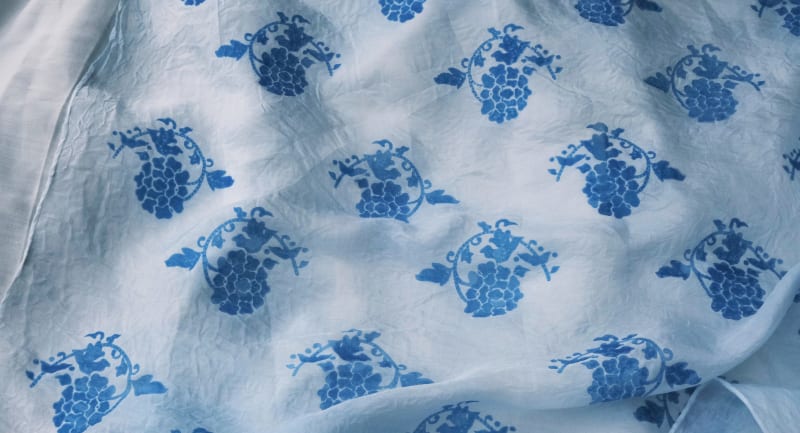


Blue Becoming
Research and process

Stage 1: Bacterial Decolorization of Indigo Dye
This image documents Stage 1 of the microbial treatment system. From left to right: the first tube contains indigo blue dye, representing the original synthetic wastewater; the second is LB medium alone, showing its natural yellow tint; the third contains LB medium, indigo dye, and Bacillus subtilis. After five days, the third tube shifts from deep green to pale green, demonstrating bacterial decolorization — the essential first step in the two-stage purification process.
Share this project

A link to this page has been added to your clipboard