

- CollegeLondon College of Fashion
- CourseBA (Hons) Fashion Design and Development
- Graduation year2025
In the loud and chaotic nature of the fashion industry around us, we often rarely stop to question how are clothes are made and what hands worked to put them together?
In Mayan culture, weaving is respected in both material and non-material terms. Mayan weaving roots back to the beginning of time when the moon goddess, Ix Chel, taught the first woman how to weave. Since then, she is believed to sit at her cosmic loom daily weaving the universe anew. As well as being the goddess of weaving, she is also known as the goddess of fertiltity and so this can be seen as a metaphor linking the two in sync. The creation of cloth echoeing the creation of man.
'Spinning of the Cosmos' is a collection inspired by the mutual relationship between humanity and textiles and how one impacts the other in a perpetual cycle; from the conditions in which a person produces a fabric, should that be at a machine or a loom, and how that fabric is used and marked, to how it is disposed, passed onto another or up-cycled into something new.
Through the building of my own looms and weaving with up-cycled fabrics that my friends helped me cut into strips, this collection is a celebration of craft and its power in uniting communities, as well as giving a sense of self to the individual. This is particularly important to me living in a mass consumerist and capitalist society, where we feel so detached from the clothes on our backs that they are easily disposed of following the decline of a trend. By embracing a slower approach to fashion, I hope to demonstrate the spiritual fulfilment that craft can bring to the creator and the consumer- if we're willing to take the time to engage with it. Ultimately, I want to encourage people to remember how their clothes are made and who makes them, in order to regain the value and joy in them and in each other.
I would like to dedicate this body of work to my late father, Ricky Kok and my boyfriend and best friend, Freddy Forbes Adam, both of whom taught me so much about the world and how to embrace it with open arms.
Final work
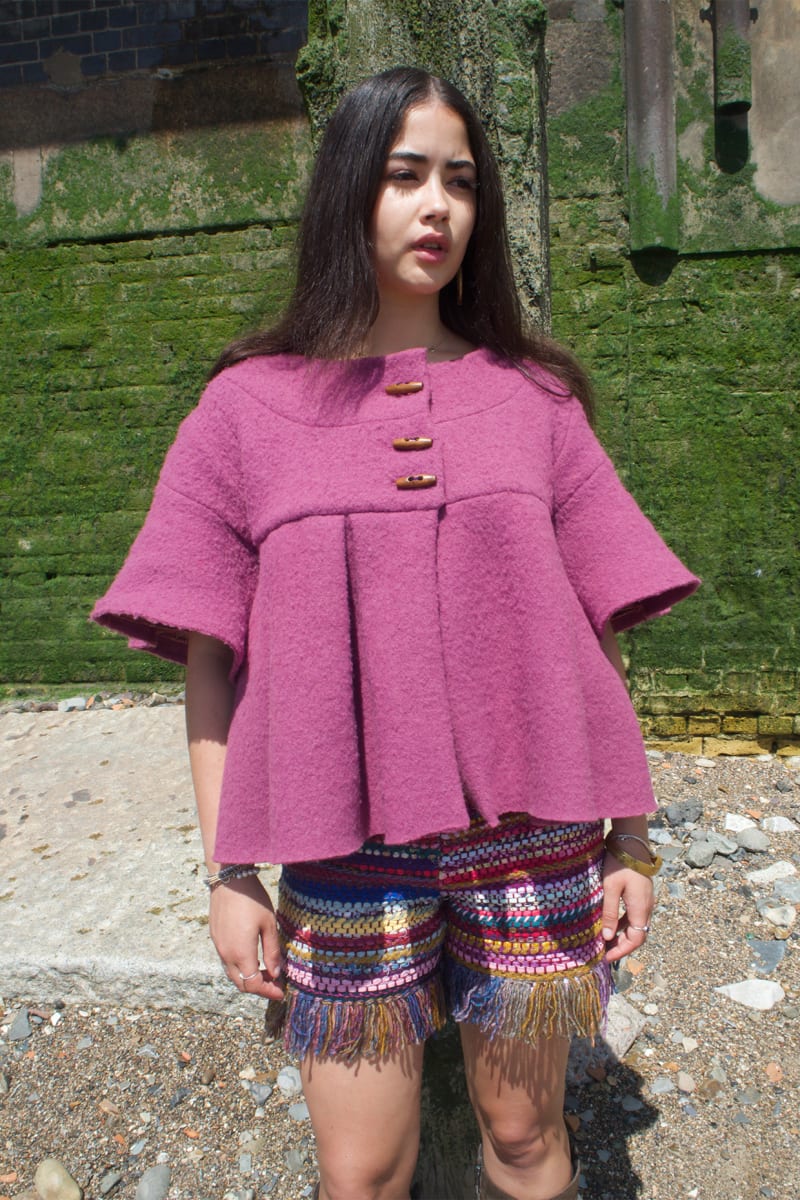


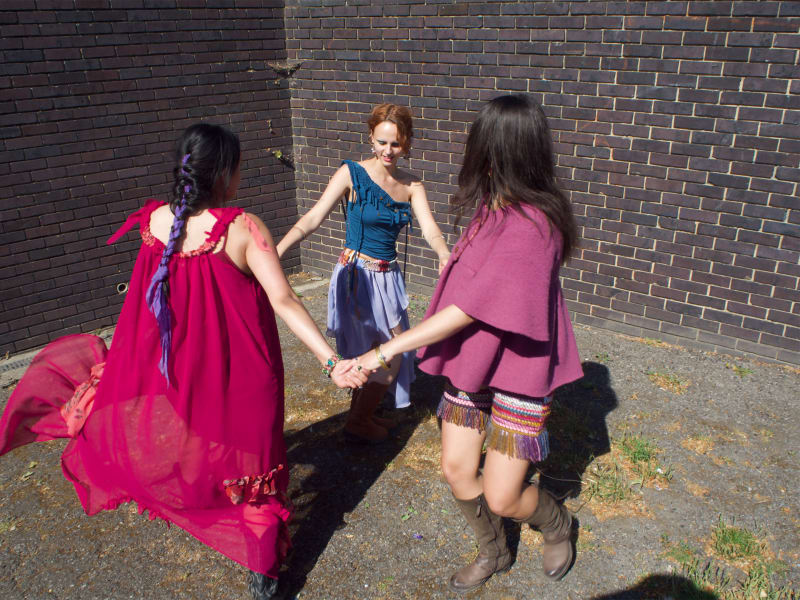


Photo by: Tommy Broomfield

Photo by: Tommy Broomfield
Research and process


Share this project

A link to this page has been added to your clipboard