

- CollegeCentral Saint Martins
- CourseMA Regenerative Design
- Graduation year2025
The Cambridgeshire Fens are a landscape of low-lying peat soils in East Anglia. Once a wetland, much of the land was enclosed and drained for agriculture from the 17th century onwards. Nowadays only 4 fragments of original undrained fen habitat remain and years of drainage have resulted in the peat degrading as it shrinks, oxidises and erodes. Soil loss is estimated to be between 8-12mm a year in the Fens. Degradation of peat soils is also associated with greenhouse gas emissions. Some sources estimate that agricultural land use in the Fens produces approximately 2.6 million tonnes of CO2 per year.
Paludiculture is the practice of farming on rewetted peat, with an elevated water table closer to the ground’s surface. It has the potential to reduce the degradation of peat soils and CO2 emissions whilst still cultivating the land and supporting fen biodiversity. There are currently no commercial paludicultural sites in the UK, but it presents an opportunity to rethink the way we interact with land in the Fens.
‘From the Fens, With the Fens, For the Fens’ uses paper artefacts made from potential paludicultural crops to tell playful stories of interconnection and changing values, whilst demonstrating the potential commercial properties of these novel crops.
Final work


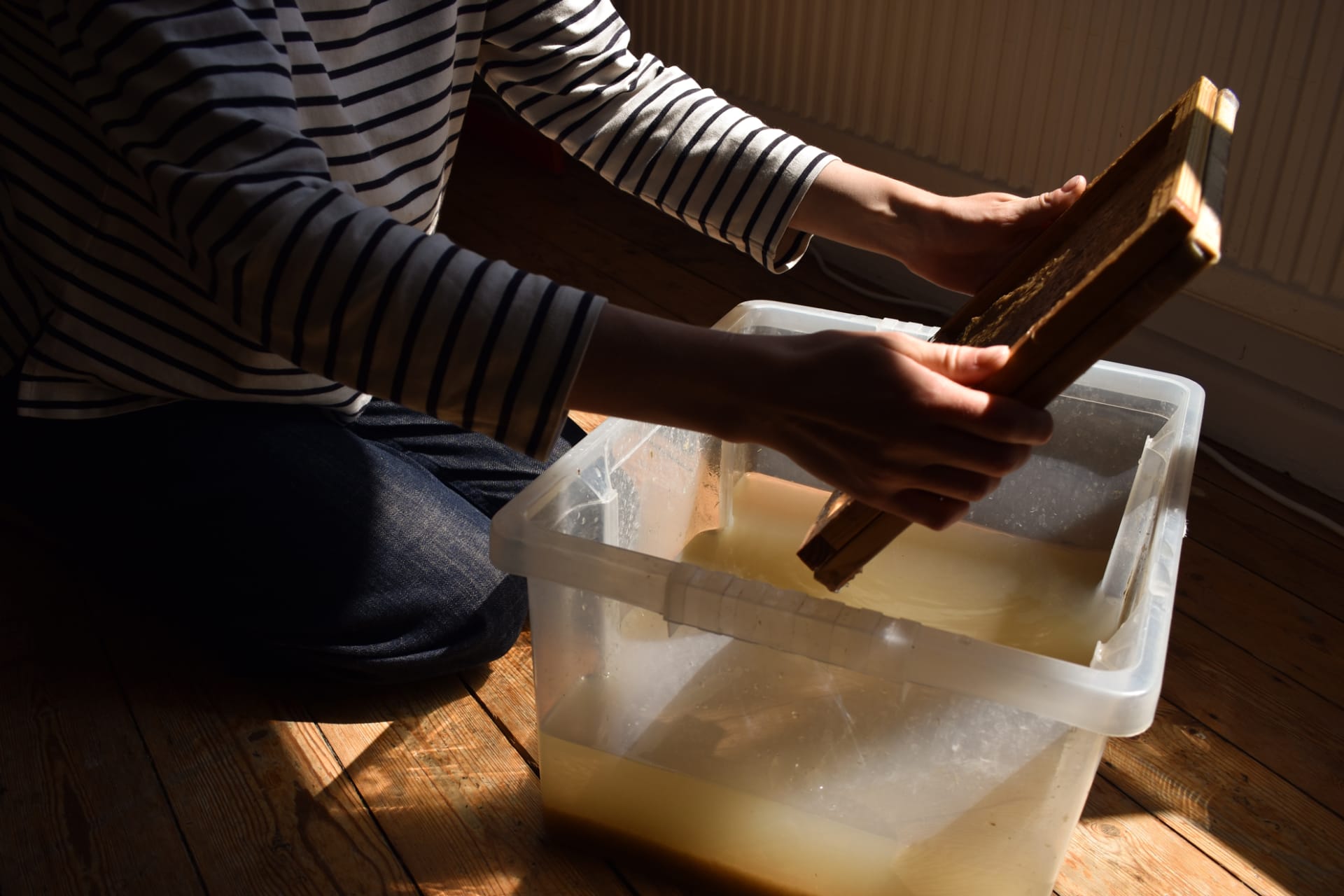
Pulling sheets of paper with a mould and deckle. Sheets of paper were made from a mix of potential paludicultural crops including sedge (carex sp.), common reed (phragmites australis) and soft rush (juncus effusus).
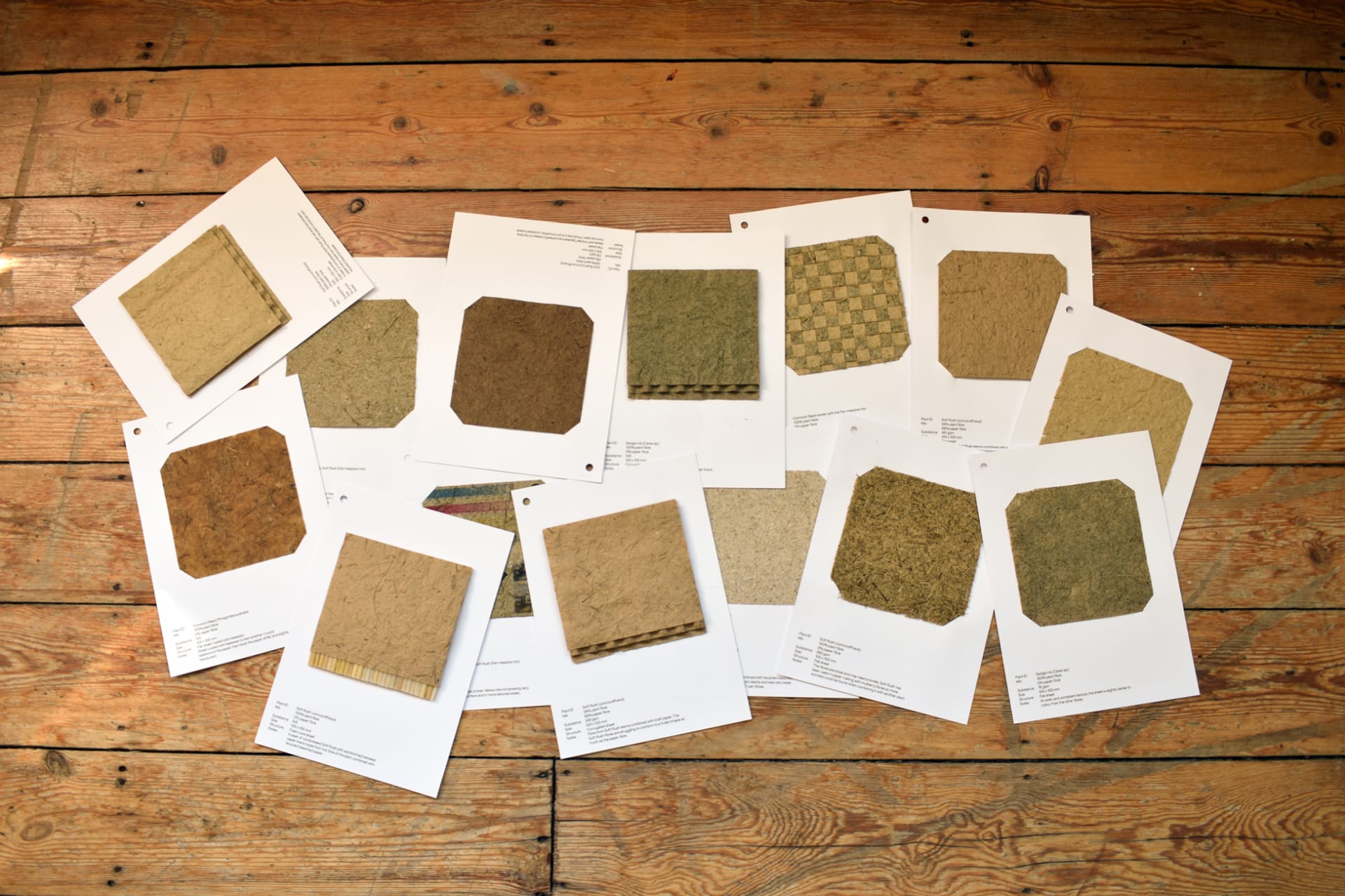
Samples used to test different fibres, paper blends and production techniques. Processes were used to produce both flat and corrugated sheets with fluting sandwiched between a liner.
Research and process


A collection of paper forms made using a range of processes and techniques. Experimenting with a mix of methods resulted in different shapes and structures, helping to showcase the capacities of paludicultural paper and influencing the artefacts designed.
Share this project

From the Fens, With the Fens, For the Fens
The Cambridgeshire Fens are a landscape of low-lying peat soils in East Anglia. Once a wetland, much of the land was enclosed and drained for agriculture from the 17th century onwards. Nowadays only 4 fragments of original undrained fen habitat remain and years of drainage hav...
A link to this page has been added to your clipboard