

- CollegeLondon College of Fashion
- CourseMA Innovative Fashion Production
- Graduation year2025
This project explores how an enhanced Digital Product Passport system can support circular practices in the fashion industry beyond regulatory compliance. While current DPP implementations mainly focus on supply chain transparency, they often lack the data granularity needed for design for recycling, reuse, and post-consumer management. This research proposes a more operational DPP model that integrates data from the design and production stages, such as material composition, structural information, and disassembly pathways, with records generated during the use phase, including wear, care, and damage. By treating the garment as a continuous carrier of information across its lifecycle, the system links upstream and downstream processes, enabling more efficient sorting, recycling, and extended garment lifespans. The project adopts a practice-oriented methodology combining industry analysis, stakeholder interviews, and digital prototype development, positioning the DPP as a dynamic infrastructure for sustainable lifecycle management and circular fashion research.
Final work
Enhanced Digital Product Passport System Prototype for Circular Fashion
This project explores how Digital Product Passports (DPP) can be enhanced through system and interface design to support circular fashion practices.
The video presents a design prototype that connects physical garments with a digital interface, enabling access to information such as materials, supply chains, wear and care records, disassembly guidance, and end-of-life pathways.
By transforming DPP from a static information record into an active system, the project investigates how design can support transparency, responsible use, and more efficient recycling processes within the fashion lifecycle.
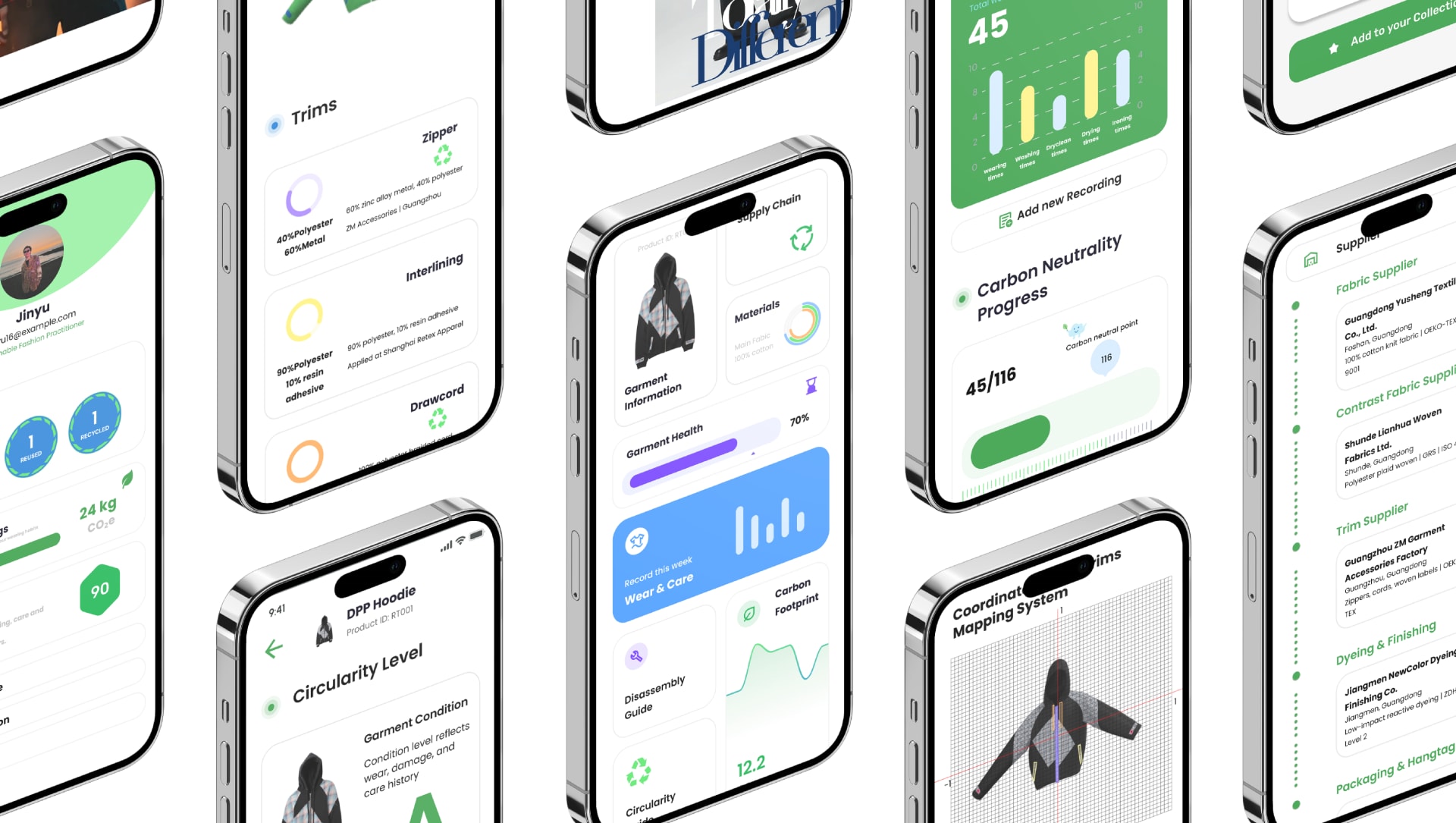
APP Interface Showcase
This visual showcase highlights the comprehensive data tracking within the app. The interface translates complex Digital Product Passport (DPP) data into user-friendly insights, featuring material breakdowns (e.g., zippers and interlining composition), supply chain mapping with specific supplier names, and a "Garment Health" indicator that monitors wear and damage. Users can also track their Carbon Neutrality Progress and access a Disassembly Guide, bridging the gap between daily use and sustainable end-of-life disposal.
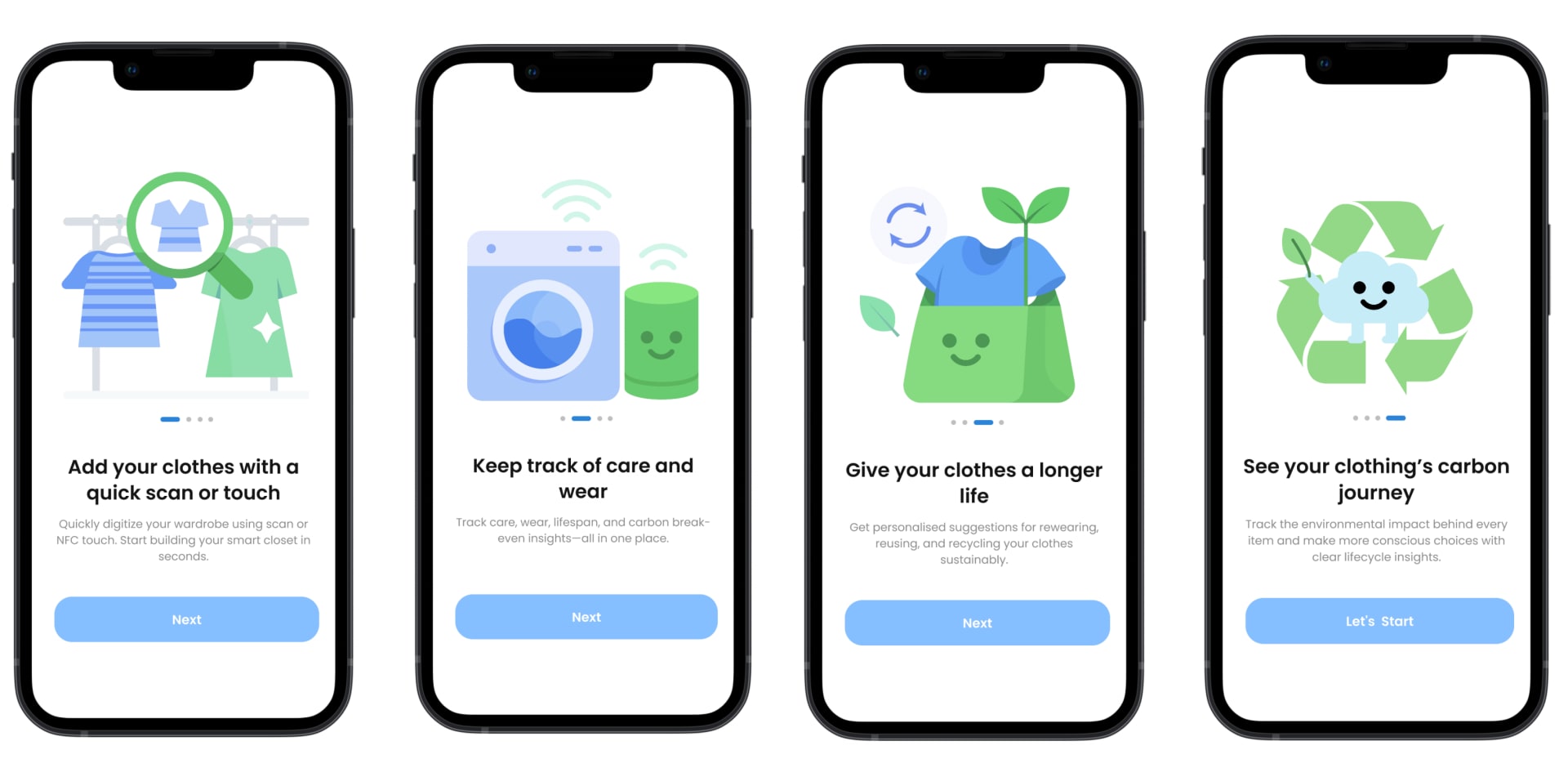
APP Onboarding Interface
This onboarding sequence introduces users to the core functionality of the RETEX app through four intuitive steps. It guides users to digitize their wardrobe using scan or NFC technology, track garment care and wear to understand lifespan, receive personalized suggestions for rewearing or recycling, and finally, visualize the environmental impact and carbon journey of their clothing. The interface focuses on making sustainable fashion management accessible and data-driven for the everyday user.
Research and process
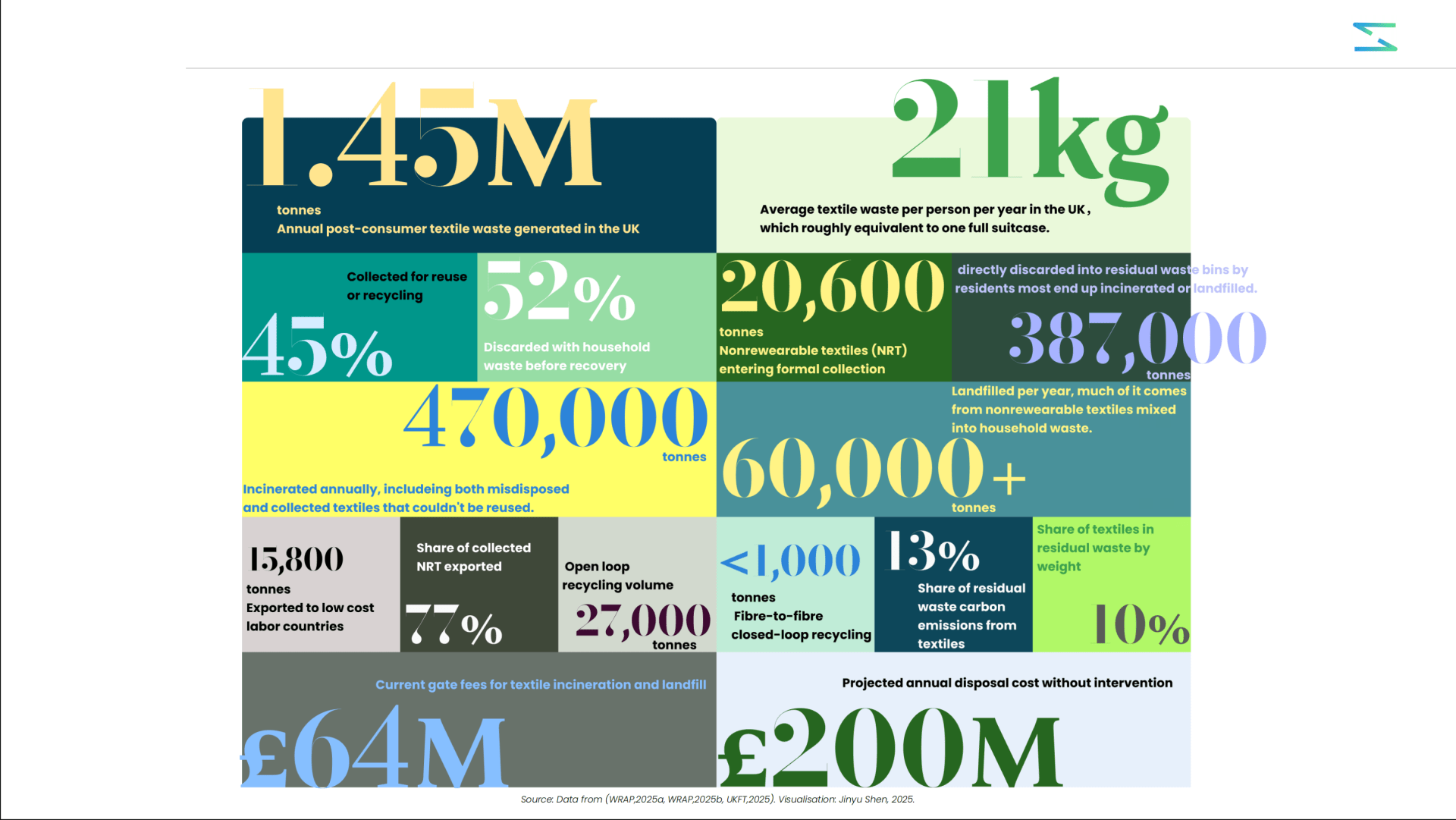
The Scale of UK Textile Waste:
This infographic reveals the critical state of textile waste in the UK, where 1.45 million tonnes are generated annually, averaging 21kg per person. Despite collection efforts, over half of all textiles are discarded with general household waste, leading to 470,000 tonnes being incinerated and 387,000 tonnes sent to landfills each year. The data underscores a significant gap in circularity, as fibre-to-fibre recycling remains below 1,000 tonnes, while the projected annual disposal cost is set to rise from £64 million to £200 million without urgent intervention.

RETEX DPP Platform Circular Data Flow
This flowchart illustrates the RETEX Digital Product Passport (DPP) ecosystem, which serves as a central hub for textile lifecycle data. The platform integrates inputs from four key stakeholders: users (wear & care records), brands (product & material data), retailers (sales data), and recyclers (end-of-life outcomes). In return, the system generates targeted outputs, providing users with garment profiles and disposal advice, brands with sustainability insights for product improvement, and recyclers with specific material breakdown packages to optimize the circular economy.
Share this project
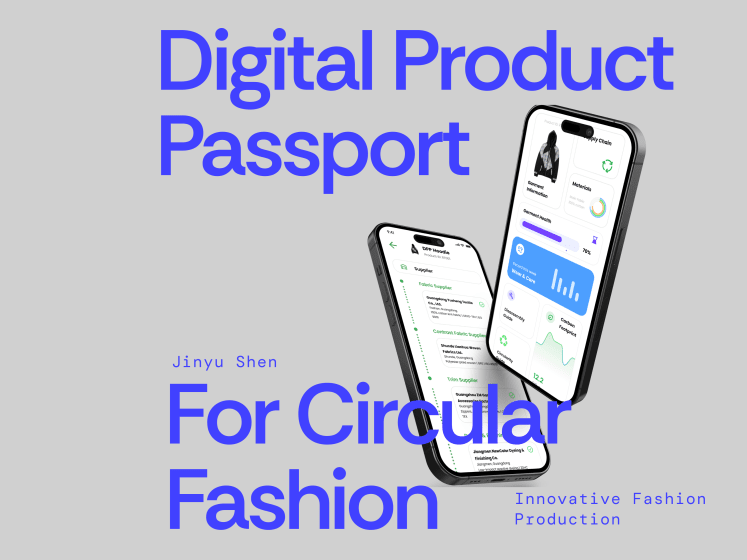
Enhanced Digital Product Passport System Prototype for Circular Fashion
This project explores how an enhanced Digital Product Passport system can support circular practices in the fashion industry beyond regulatory compliance. While current DPP implementations mainly focus on supply chain transparency, they often lack the data granularity ne...
A link to this page has been added to your clipboard