
- CollegeCentral Saint Martins
- CourseM ARCH: Architecture
- Graduation year2025
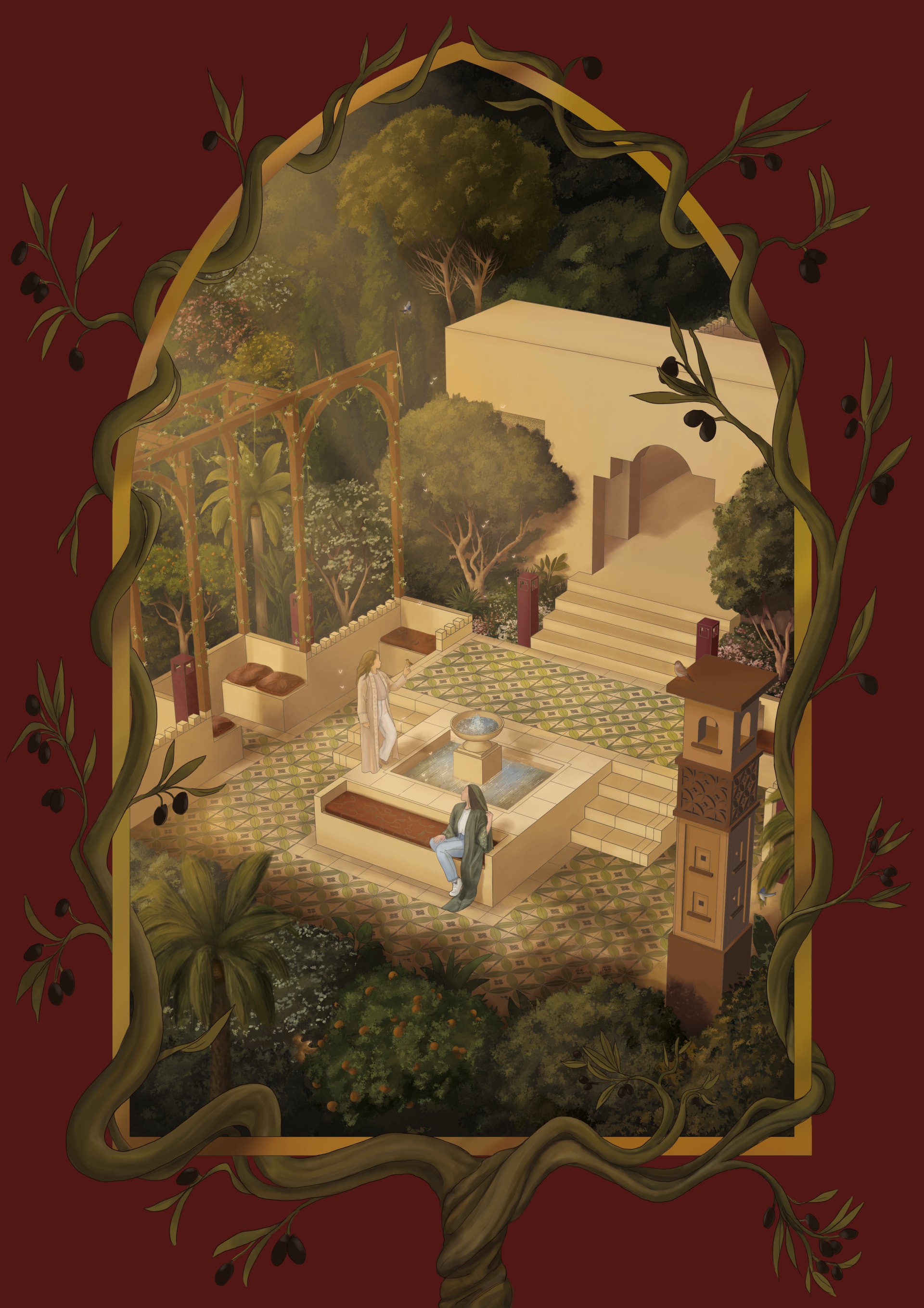
This project explores how architecture can bridge the gap between Muslims and nature, fostering spiritual reflection, social connection, and environmental awareness. In the UK, ethnic minorities face barriers that prevent access to green spaces, while British Islamic architecture rarely reflects Islam’s deep ties to environmental care and stewardship.
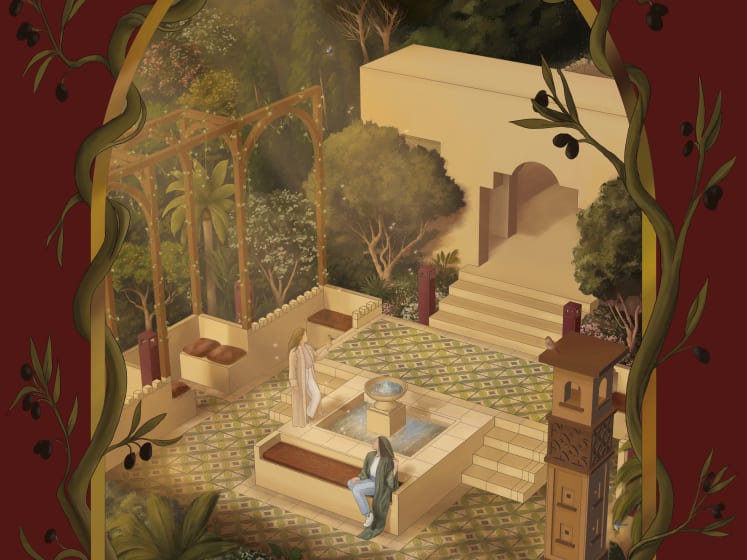
'Framing the Divine' challenges that exclusion through a new architectural framework at Nadi Park Royal, a London centre used by Muslims for communal activities. Using courtyards and architectural follies, the design creates private, sensory spaces that support prayer, mindfulness, and engagement with the landscape, particularly for women, who have limited private spaces. It draws from Islamic values of observation, gratitude, and reflection, and reinterprets English picturesque traditions to foster belonging. Framed views, natural light, and passive design elements highlight divine creation and ecological awareness.
The project expands the dialogue around access to nature, cultural representation, and inclusive public space, envisioning architecture that nurtures spiritual and environmental consciousness while uniting communities through shared experiences of space and nature.
Final work
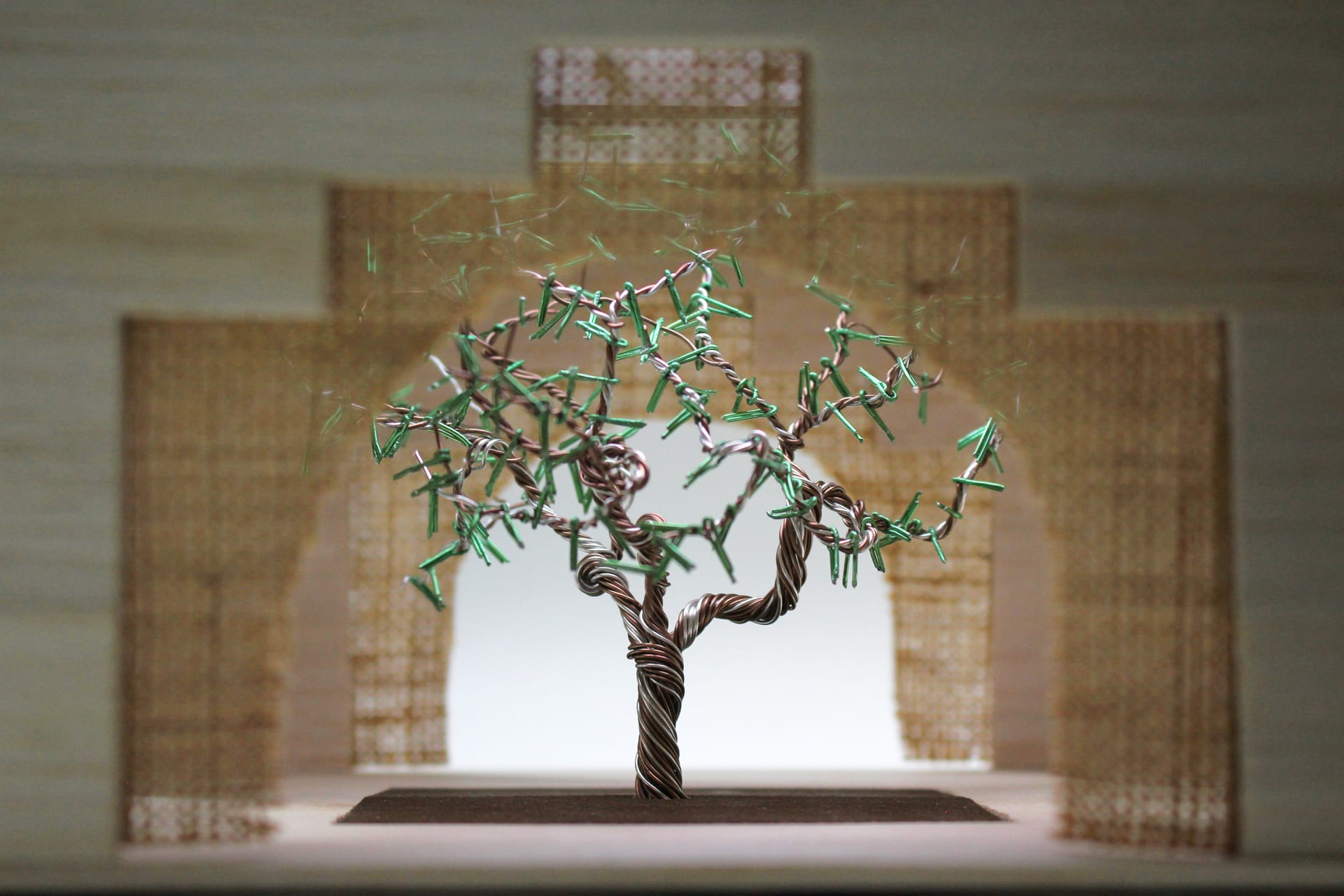
The Olive Tree
A model of the entrance to the 'Garden of Harvest.'
Within Nadi Park Royal stands an olive tree, planted 20 years ago by a member of the community. Previously concealed by fencing and dense shrubs, the tree now defines the threshold to the 'Garden of Harvest,' welcoming people into a space of rooted comfort, where stories grow alongside the fruit-bearing trees.
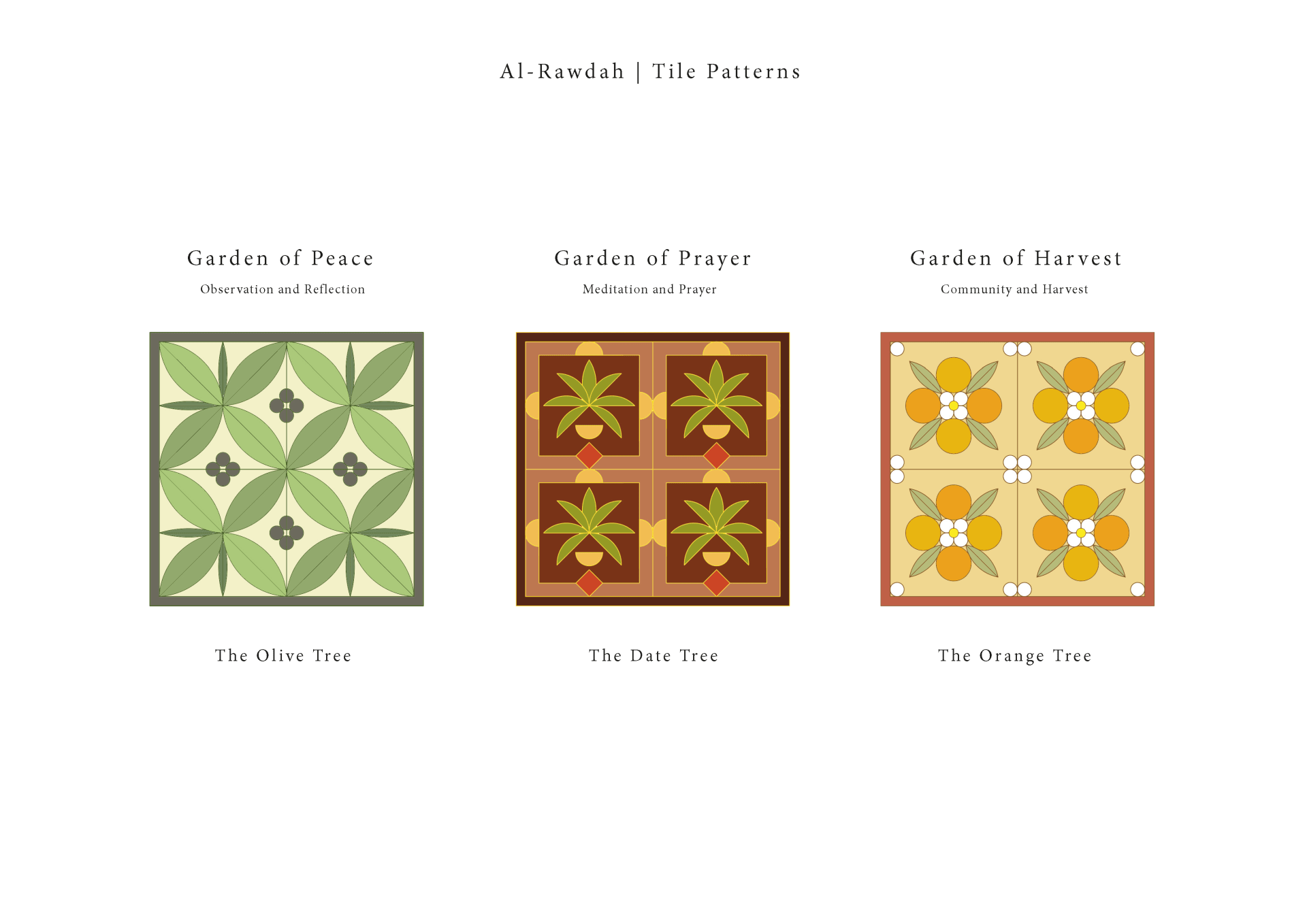
Tile Patterns
The tile patterns for each of the gardens that represent the olive, date and orange tree.
Research and process
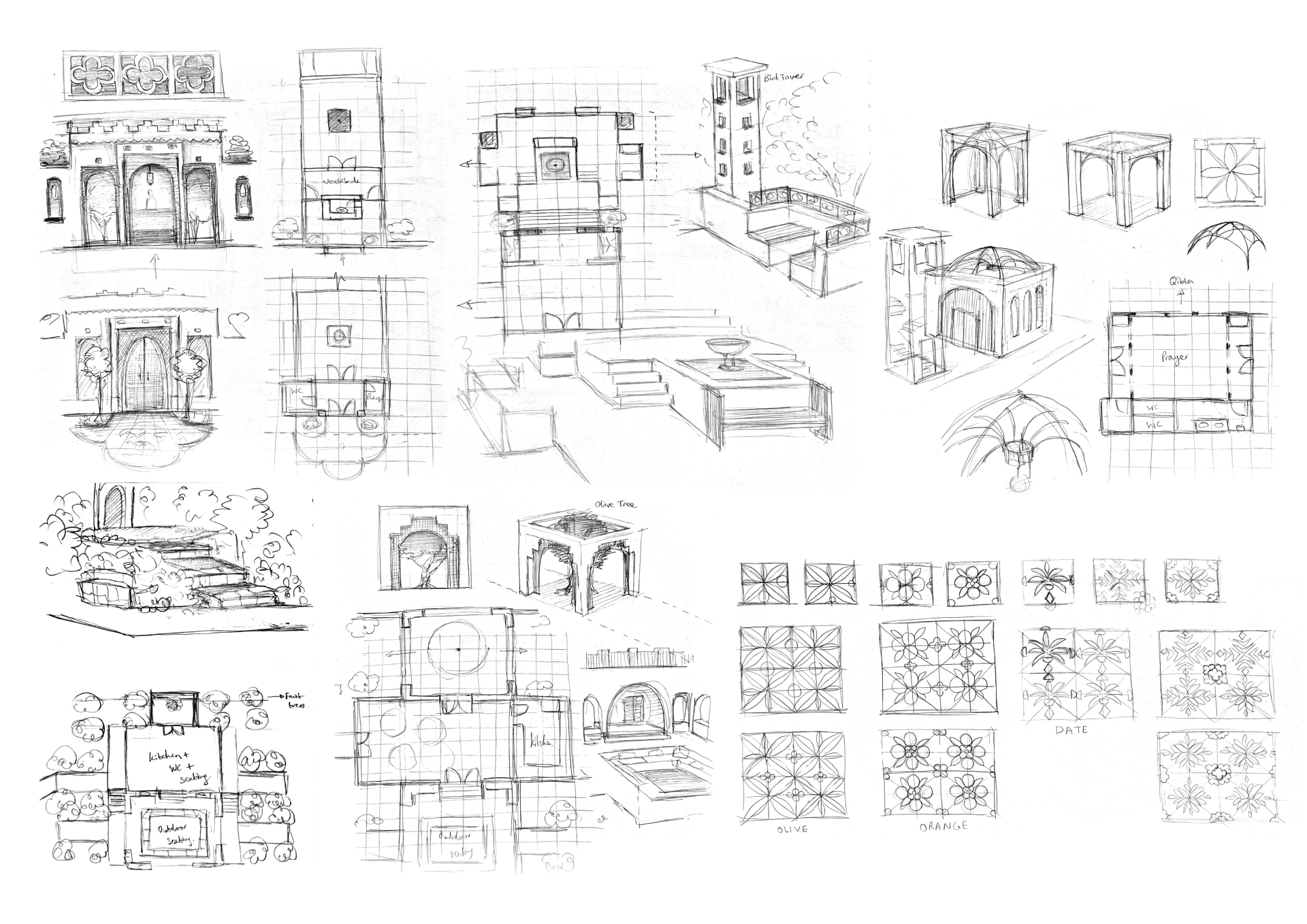
Sketch Iterations
Sketches of the 3 zones representing observation, meditation and harvest.
Share this project
Framing the Divine: Al-Rawdah
This project explores how architecture can bridge the gap between Muslims and nature, fostering spiritual reflection, social connection, and environmental awareness. In the UK, ethnic minorities face barriers that prevent access to green spaces, while British Islamic architect...
A link to this page has been added to your clipboard