
- CollegeCamberwell College of Arts
- CourseMA Interior And Spatial Design
- Graduation year2025
After the passing of a loved one, familiar spaces can turn uncanny, speaking quietly of what’s no longer there. Inspired by the German expression Trauer Tragen, meaning both to grieve and to wear mourning, the work considers the burden of memory not only as emotional but also as spatial and material.
This project, situated in my grandparents’ home, is now marked by the absence of my grandfather. It acts as a portal between presence and absence, a threshold where memory trembles and grief becomes tangible.
Through casting and reframing traces, it explores the in-between, the moment when someone is no longer there, yet everything still speaks of them. Rather than reconstructing the past, the work translates what remains into a physical form of mourning, navigating personal tension between holding on and letting go.
Final work
Letting Go
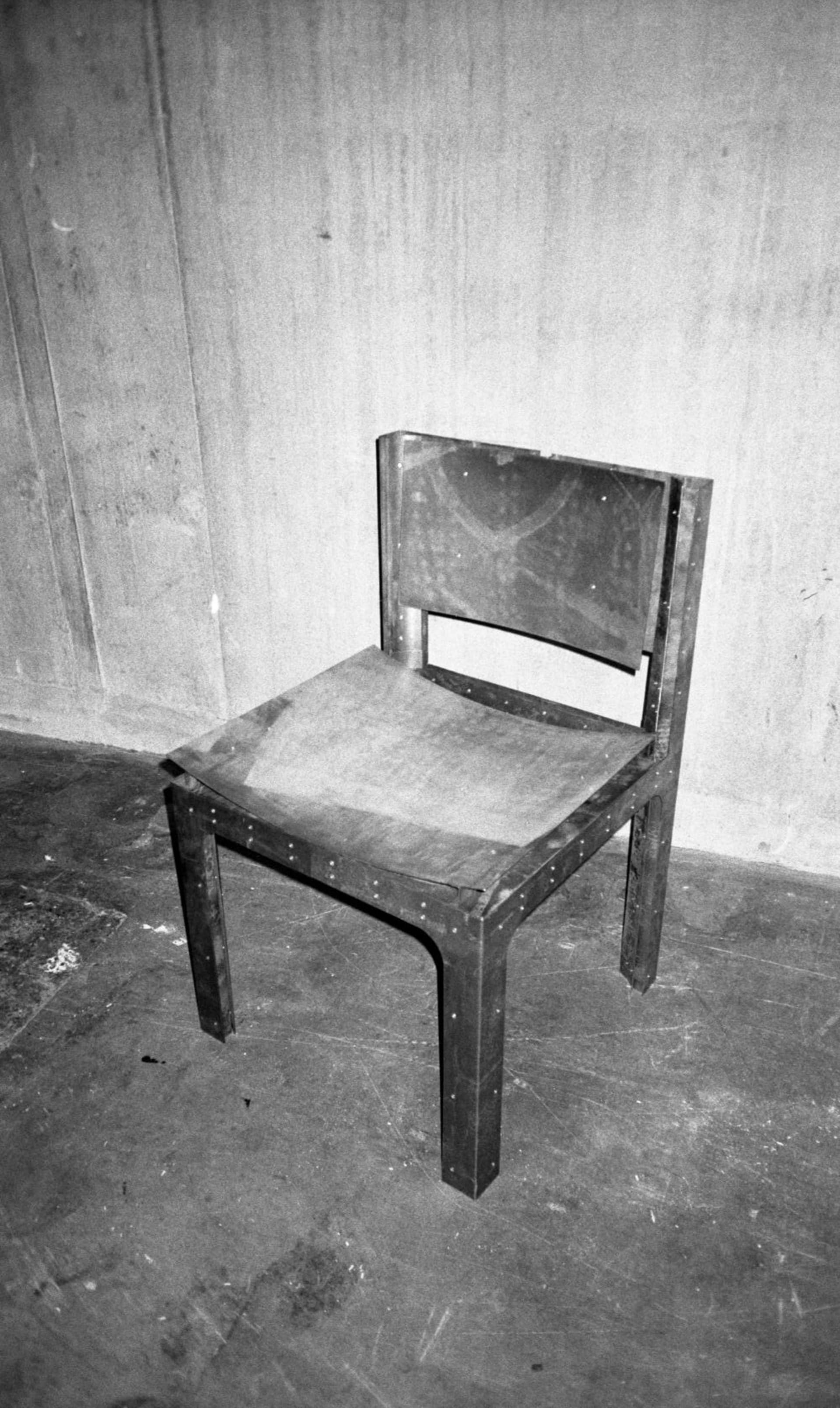
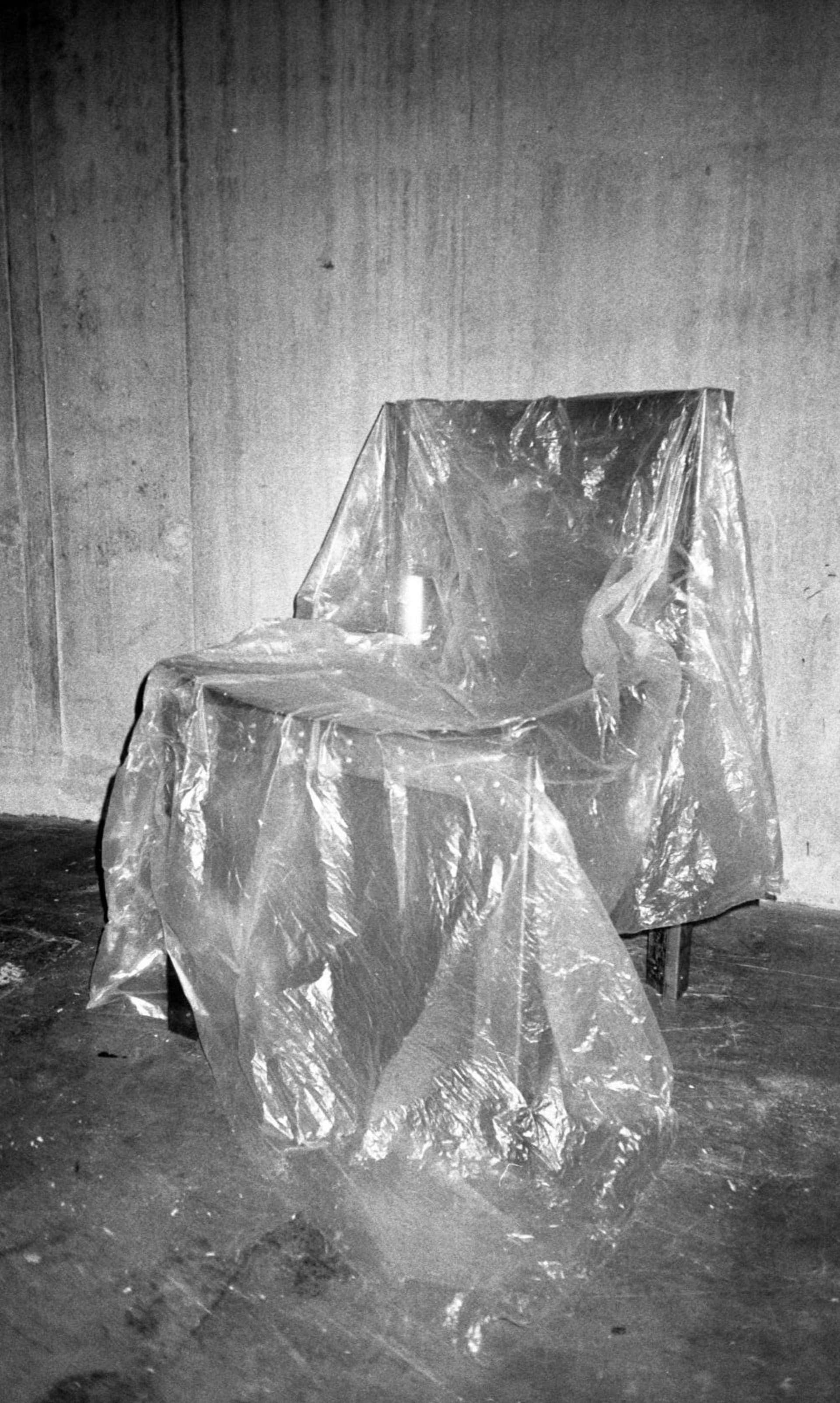
The process of making this chair parallels the experience of grief, both shaped by an ongoing negotiation between holding on and releasing. The tension between allowing time to move forward and the desire to preserve what remains is central to the work. The chair becomes a material reflection of this internal struggle and the conversations it provokes.

Book Excerpt
This project is accompanied by a book that brings together process documentation, spatial mappings, and a series of reflective essays. The publication traces the development of the work, the emotional and material decisions involved in making it, and the relationship between grief, personal difficulty, and the act of letting go.

Analog Photographs
The images for this project were made with an analogue camera. Many of the black-and-white photographs are slightly unfocused and illuminated by a stark flash, producing an uncanny atmosphere. This visual quality mirrors the instability of memory, its tendency to fade, fragment, and shift, and echoes the disorientation that often accompanies grief.
Research and process

Work in Progress
The chair is made completely out of steel and assembled using rivets.
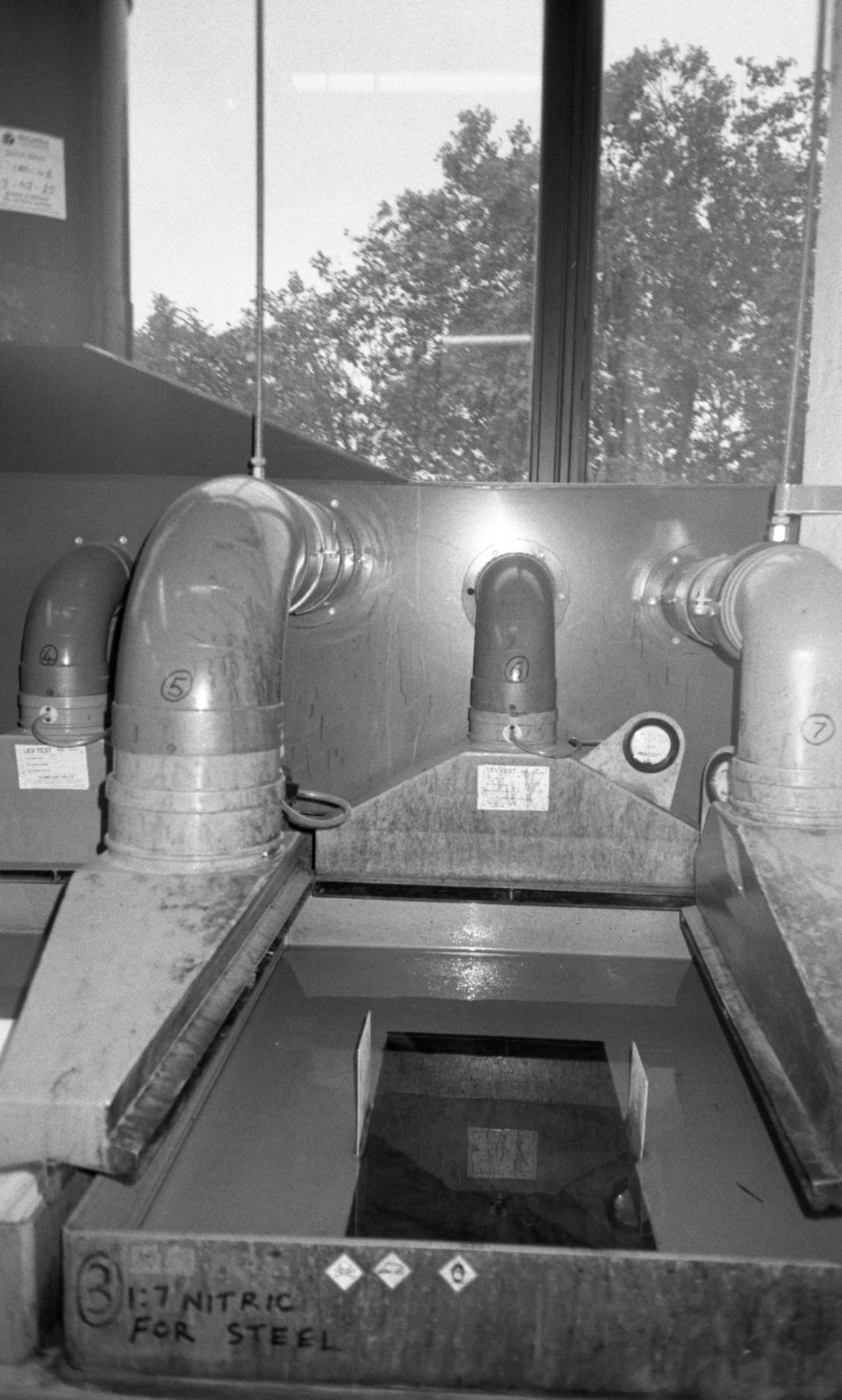
Etching
Every metal plate used to construct the chair was etched on both sides. Each etching derives from moulds taken from textiles, walls, floors, and objects in my grandparents’ home, embedding the material traces of that space directly into the structure of the work.
