Showcase

Bindu - “Each drop a memory, each object a pause”

Akhil Krishnan

Profile picture of Akhil Krishnan

I’m an Industrial Designer and Researcher focused on crafting design interventions that are purposeful, poetic, and ecologically conscious. With over four years of industry experience, I’ve worked across diverse domains from luxury watches and metalware to large-scale installations and small leather goods.

My practice sits at the intersection of material storytelling, sustainability, and cultural inquiry, reimagining everyday objects as tools for reflection, ritual, and behavioural shift. I strive to create work that blends thoughtful detail with effortless elegance, developing a distinctive design language grounded in care, restraint, and sensory experience.

I’m an Industrial Designer and Researcher focused on crafting design interventions that are

Hire me via Arts Temps

Bindu is more than a droplet, it is the primordial seed, the point from which all creation unfolds. In Sanskrit cosmology, it symbolizes the source of consciousness, the beginning of form, and the pulse of intention. As a water droplet, it holds the tension between ephemeral presence and eternal origin. A quiet metaphor for renewal, reverence, and the infinite within the minimal.

Bindu reinterprets everyday water rituals, revealing the hidden narratives of consumption and consequence. Through a set of rhythmic, reflective objects ( Pavita, Sanchaya, kalasha) it fosters a mindful connection with water not as a mere utility, but as a living entity. Blending barefoot design thinking with Indigenous wisdom, it challenges Western anthropocentrism, weaving history, and cultural memory into design. In a world seduced by convenience, these artefacts act as poetic interventions, urging slowness, reverence, and behavioural change. By engaging the senses, they disrupt habitual myopia, inviting a deeper, more sustainable relationship with water one shaped by recognition, ritual, and respect.

Final work

Component 4 Akhil Krishnan

Living in a time of climate extremes, rising costs, and unchecked water consumption, Pavita, Sanchaya, and Kalasha form a set of frugality tools designed to prompt reflective, restorative behaviours in daily life in our kitchen. These artefacts challenge the culture of convenience by reintroducing ritual, intention, and care into acts of water use transforming the ordinary into a space of awareness, resilience, and ecological shift.

  • Pāvita reimagines the act of dishwashing by questioning our dependence on water, synthetic liquids, and plastic tools. Inspired by indigenous practice
  •  Pāvita repurposes used wine corks, pairing them with kitchen by-ritual. By replacing water with cork granules as a dry-cleaning medium, Pāvita offers
  • Pāvita
  • A greywater vessel and wash bowl inspired by ancestral Indian forms like the lota and hand bowl. Designed for modern kitchens, it features a terracott
  • kalasha not only makes consumption visible but also enables a second use of this resource - water " the substance of life and death"
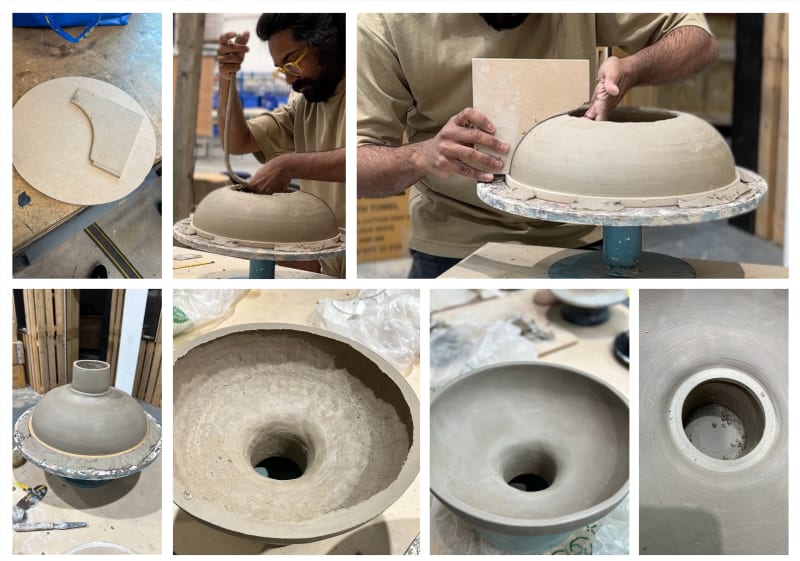
  • Clay holds memory-each mark, each gesture etched in silence. It carries the weight of intention, turning touch into trace, form into meaning.
  •  Sanchaya is a frugal tool that transforms the everyday act of cooking into a quiet ritual of conservation. Designed to capture steam and condense it
  •  Sanchaya is a frugal tool that transforms the everyday act of cooking into a quiet ritual of conservation. Designed to capture steam and condense it
  • Inspired by ancestral distillation practices, and crowned with a transparent glass top, it makes the invisible cycle of water visible—reminding us tha

Research and process

  • while often overlooked, waste wine poses serious environmental and infrastructural challenges if poured into standard sewage systems. With an average
  • To assess the hygienic efficacy of alternative dish-cleaning methods, an agar agar test was conducted comparing three approaches: (A) conventional soa
  • When ground finely, cork absorbs both oil and water—enhancing its natural abrasive quality. Rich in Suberin and phenolics, cork resists microbial grow
  • SANCHAYA lid poetically reframe our relationship with water, presenting it as a precious living element rather than a product. As water evaporates fro
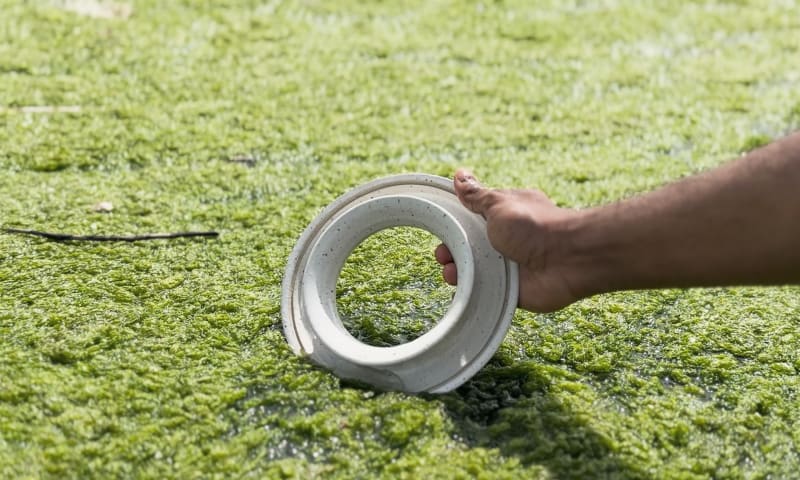
  • The collaboration with Rescue Clay is closely aligned with the ecological and ethical foundations of this project. Each year, vast amounts of clay fro
  • Terracotta functions as a natural filter due to its microporous structure, which allows for slow percolation of water-physically trapping suspended pa

Share this project

Bindu - “Each drop a memory, each object a pause”

Bindu is more than a droplet, it is the primordial seed, the point from which all creation unfolds. In Sanskrit cosmology, it symbolizes the source of consciousness, the beginning of form, and the <st...

A link to this page has been added to your clipboard